Menu
Our address: Nikopol city, Trubnykiv avenue, 91, office 220
140.00 грн
/pcs

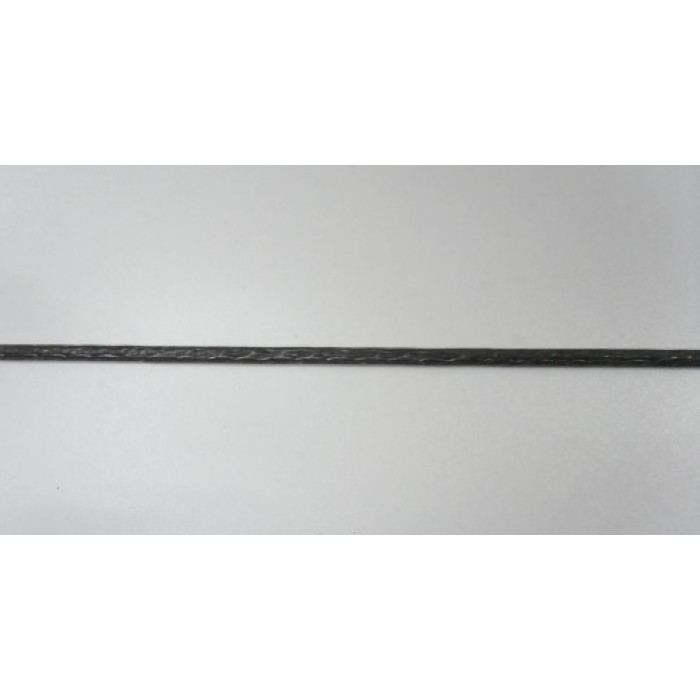
Decorative forged rod, Grapevine, 12х3000 mm
Product Code: 28782
In Stock
140.00 грн
/pcs
Buy in one click
Return guarantee Free exchange/return of goods within - 1 day Official warranty from the manufacturer - 12 months Payment Cash, Visa/MasterCard, payment via Privat24, non-cash settlement
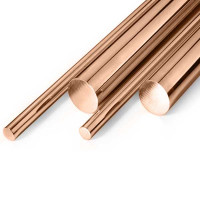
Decorative forged rod, Grapevine, 12х3000 mm is a semi-finished metal product created by cold or hot forging, where the blank is given a specific shape under pressure. Unlike rolled bar, forged bar has a more uniform and dense metal structure, which increases its durability, wear resistance, and strength. It is most often made of alloy, carbon, or stainless steel. Forged bar is often used in artistic forging, construction, mechanical engineering, and in the creation of critical components where load-bearing capacity and reliability are essential.

The main thing
View by manufacturing method
It is produced by plastically deforming metal under high pressure. The process begins with the preparation of a blank—a steel ingot or rolled section of the required size. The blank is heated in a furnace to forging temperature, typically 900–1200°C, to make the metal ductile. After heating, the metal is forged using hammers or presses, where the blank is repeatedly compressed and drawn, forming a rod of a specified cross-section—round, square, or rectangular. During forging, the metal structure is compacted, internal defects are eliminated, and mechanical properties are improved. The rod is then cooled naturally or by heat treatment, after which it is straightened, cut to length, and quality controlled.
Chemical composition
Carbon, alloy, and stainless steels are most commonly used. Carbon steels typically contain 0.15–0.60% carbon, 0.3–0.8% manganese, and up to 0.35% silicon. These rods offer good strength and machinability. Alloy steels additionally contain chromium (up to 2%), nickel (up to 3%), molybdenum, vanadium, or other elements that increase strength, corrosion, and thermal resistance. Stainless steel forged rods contain at least 12% chromium, as well as nickel and molybdenum, which ensure corrosion resistance.
Type by purpose
In construction, forged rod is used to manufacture fasteners, embedded parts, and load-bearing structures. In the energy and oil and gas industries, it is used to manufacture equipment components operating under high pressure and temperature. Forged rod is also in demand in artistic forging—for the creation of fences, railings, gratings, and decorative elements, where not only strength but also aesthetic appeal are important.
A type
Forged decorative rod
Dimensions (width, length)
12х3000 mm
Additional services
Cutting is carried out according to the client's order and packaging of products according to the client's orderSent by any carriers in Ukraine
The country of manufacture
Ukraine

No questions about this product, be the first and ask your question.

Questions & Answers

Table of weights of forged rolled metal products

Nominal size (diameter/side), mm

Weight of 1 m of forged circle, kg

Weight of 1 m of forged square, kg

50

15,41

19,63

60

22,19 28,26

70

30,21

38,47

80

39,46

50,24

90

49,94

63,59

100

61,65

78,50

110

74,60

94,98

120

88,78

113,04

130

104,19

132,66

Standards for forged metal products

GOST (Basic Forging Standards)

GOST 8479-70 - Forgings from Structural Alloy and Carbon Steels;

GOST 1050-2013 - High-Quality Carbon Steels (for Forgings);

GOST 2614-79 - Forgings from Tool Steels;

GOST 7062-90 - Forgings from Titanium Alloys and Titanium;

GOST 4543-2016 - Alloy Steels (applies to forgings by material);

GOST 7829-70 - Forgings from Alloy and Carbon Steels (General Purpose);

GOST 25054-81 - Forgings from Heat-Resistant and Corrosion-Resistant Steel Alloys;

GOST 1133-71 - Forgings from Alloys and Non-Ferrous Metals;

GOST 20072-74 - Forgings from Structural Alloy Steels.


GOST on Inspection and Tolerances

GOST 10243-75 - Test Methods for Forgings;

GOST 8479 - Testing and Quality Requirements;

GOST 7505-89 - Tolerances, Forgings, Forging Oversize and Allowances;

GOST 7565-81 - Sampling for Mechanical Testing.


ISO (International)

ISO 898 - Mechanical Properties of Products (Including Forged Elements);

ISO 683 - Heat-Treatable Steels (Used for Forgings).


EN (European Standards)

EN 10254 - Forgings for Pipelines;

EN 10250 - Open Steel Forgings;

EN 10083 - Tempering and Hardening Steels (for Forgings);

EN 10222 - Forgings for Pressure Equipment.

Steel grades for forged rolled metal products

Alloy structural steels (GOST 4543): 45Kh, 40Kh, 20Kh, 35Kh, 15Kh, 30Kh, 20KhN3A, 30KhGSA, 12KhN3A, 20KhM, 35KhM, 30KhN2MFA, 38KhN3MA, 40KhN2MA, 40KhN, 38Kh2MYuA, 25KhGT, 18KhGT, 40KhGSA, 35KhGSA.

Carbon structural steels (GOST 1050): St30, St50, St10, St20, St40, St35, St55, St25, St45, St15.

Corrosion-resistant and heat-resistant steels (GOST 5632): 10Kh17N13M2T, 40Kh13, 30Kh13, 20Kh13, 12Kh13, 08Kh18N10, 15Kh25T, 20Kh23N18, 03Kh17N14M3, 12Kh18N10T.

Low-alloy and high-strength steels (GOST 19281): 15GF, 17G1SU, 17G1S, 14G2, 10G2S1, 09G2S.


Tool steels:

Spring steels: 70S2KhA, 60S2A, 65G, 55S2.

Carbon steels (GOST 1435/5950): U12, U10, U9, U8, U7, U8A;

Heat-resistant steels and steels for critical forgings: 15Kh1M1F, 20Kh1M1F1TR, 12Kh1MF, 15Kh5M;

Alloyed tool steels: 3Kh2V8F, 9KhS, 4Kh5MFS, 5KhNM, Kh12MF, Kh12, KhVG;

Bearing steels: ShKh15SG, ShKh15.