

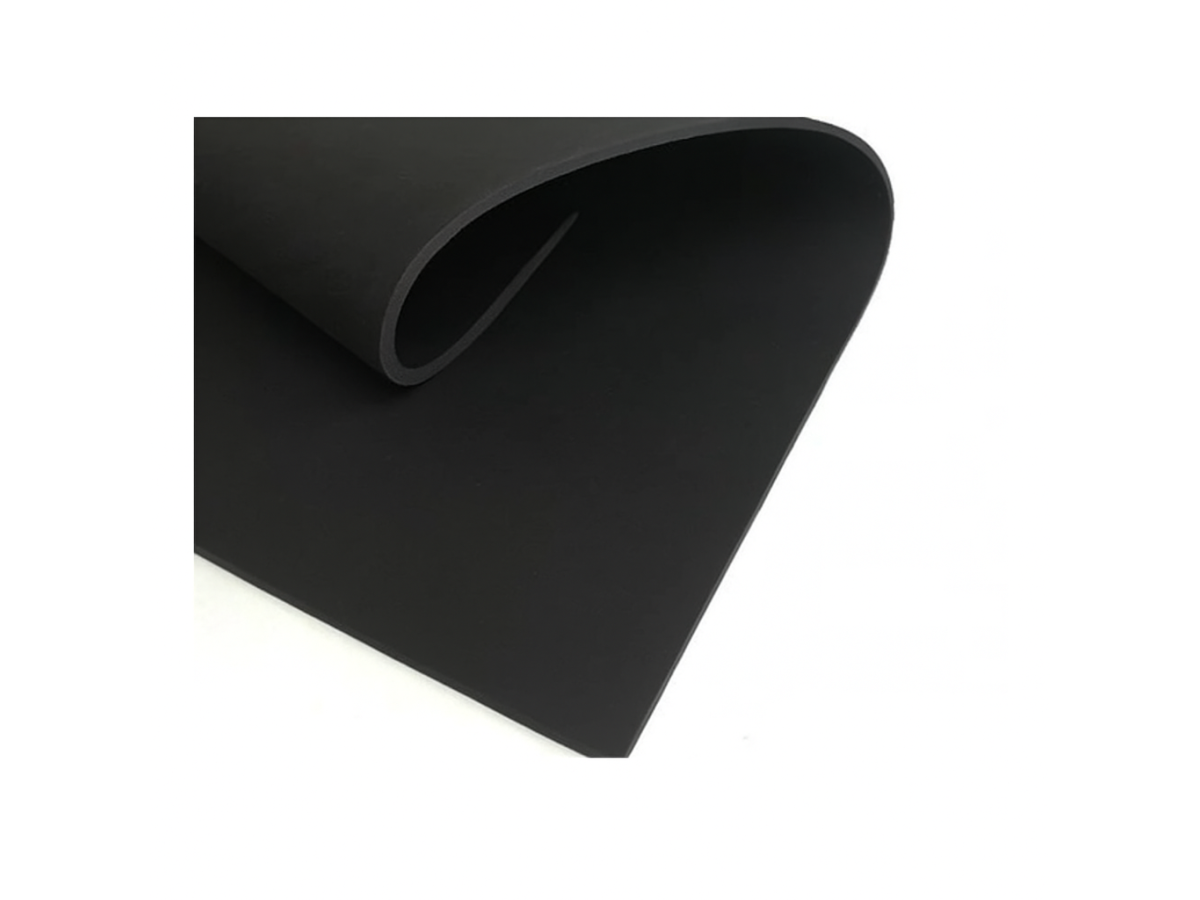
Currently, the vast majority of food products come to store shelves in packaged form, and containers with lids of various volumes often serve as packaging. They can be made of glass, tin, high- and low-density polyethylene, have a variety of geometric shapes and colors, but in all this diversity, one common feature can be identified for all, namely, that a ring-shaped sealing gasket is always used to close them. It prevents the penetration of microorganisms that cause fermentation, mold formation and other undesirable processes, and also does not allow carbonated drinks to lose some of the carbon dioxide dissolved in them prematurely due to the pressure difference inside and outside the bottle. For their manufacture, sheets rolled into rolls are used food grade rubber, possessing all the properties necessary to solve the task assigned to it.
Let's list the most important of them:
- High elasticity even with little effort allows the gasket to be pressed tightly against both articulated surfaces, thereby ensuring complete closure of the gap between them. Due to this, hermeticity is achieved, reliably isolating the internal contents of the container from mixing even with small portions of air from the outside.
- The raw material for production does not contain any components that are hazardous to human health, have an unpleasant aroma, or can spoil the taste of the product. It does not enter into chemical reactions with organic substances, therefore it retains mechanical strength and is not a source of harmful impurities that get into food.
- Since cans, bottles and barrels have different neck diameters, when the gaskets for them are aligned relative to a common center, a set of concentric rings is obtained that completely cover the circle of the largest outer diameter. It follows that when cutting sheet using the simplest blades with circular guides on the part, the amount of waste can always be reduced to a minimum, thereby bringing the material utilization factor to a maximum and saving some money on its purchase.
Food-grade rubber analogs
It has similar properties. Vacuum rubber, however, it is more useful in the installation and maintenance of various equipment not in the food industry, but in other industries. Its main feature is a very dense structure, which has no capillaries or cavities and does not allow atmospheric air to diffuse through its thickness into the rarefied internal space of equipment and laboratory devices. There are many other types of sealing materials, two of which are worth discussing separately.
Sponge porous rubber
As the name suggests, sponge cellular rubber has numerous air bubbles in its thickness, so even with a large volume, a part made from it has an insignificant weight. It has excellent capabilities to dampen vibrations of any amplitude and frequency, so it is widely used to manufacture elements that act as shock absorbers, taking on impact loads and eliminating unwanted vibration. The raw material for its production is resistant to dissolution in gasoline and other organic solvents. This allows it to be used where contact of the seal with fuels and lubricants is possible, for example, near gas tanks and under the hood of cars. This material is also often used to cover the gaps of compensators designed to eliminate mechanical stress in long sections of pipelines that arise due to thermal expansion and contraction when the ambient air temperature changes during the day and when the climatic seasons change.
Molded rubber products
Produced on the basis of raw materials consisting of organosilicon molecules molded rubber products significantly differ from rubber ones in a number of characteristics. Silicone has a much greater resistance to high temperatures and frost, so it is quite suitable for creating sealing elements around the perimeter of oven and freezers doors that retain their elasticity, do not crack when cooled and do not soften when heated. In washing machines, silicone seals eliminate water leakage through the doors, and in furniture they protect their ends from impacts on the supporting frame, acting in this case as shock absorbers. Products made from this material easily restore their original shape immediately after the removal of deformation-causing forces and are capable of withstanding thousands of compression and straightening cycles without compromising their integrity.