

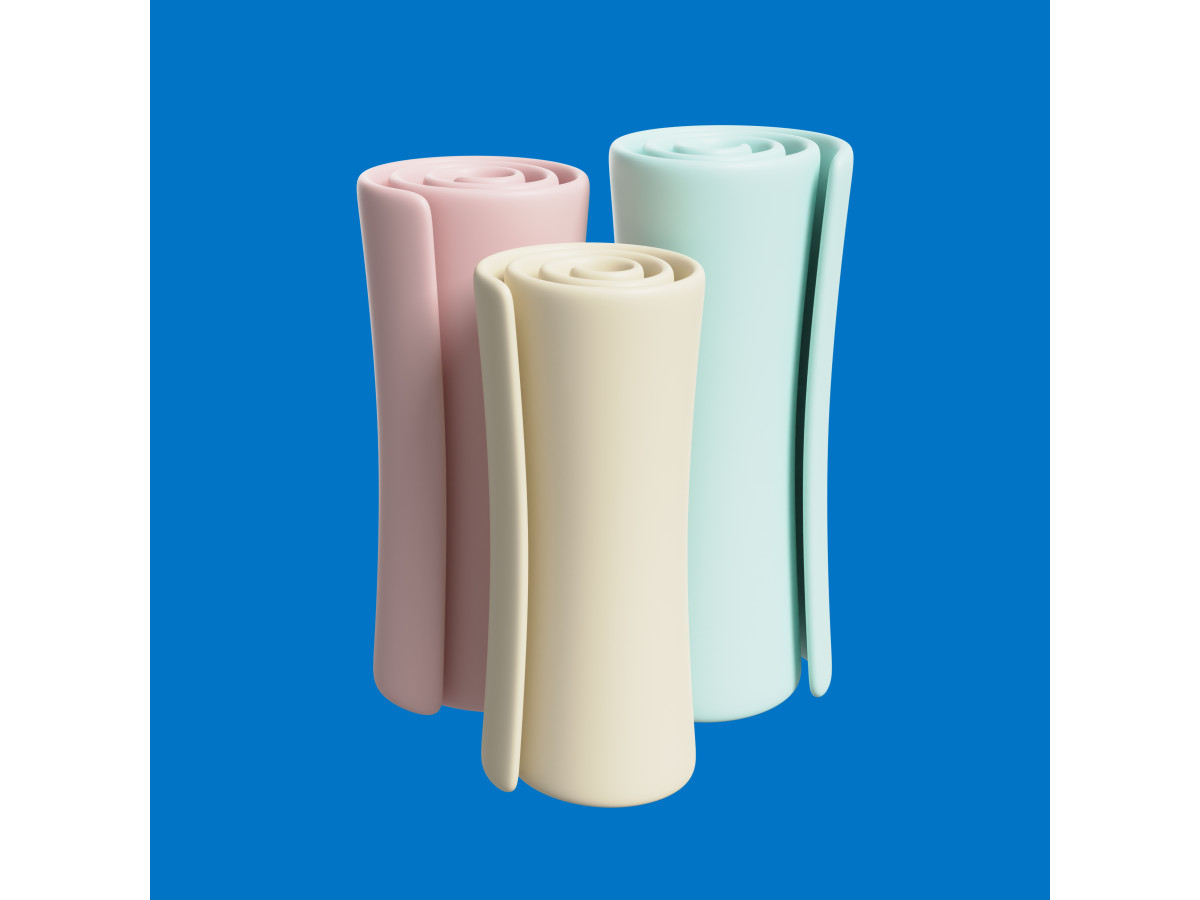
Under the general name silicone rubber A wide group of materials with different shapes, sizes and purposes is collected. All of them are produced from a basic organosilicon substance with the introduction of additives to improve individual technical characteristics and obtain various properties useful for practical application.
Among the variety of products made from silicone rubber, the following can be distinguished:
- Cords with a P- or B-shaped cross-section are capable of performing many functions, each of which is useful in one or more areas of application. If components that stabilize the state during heating are added to the raw materials for their production, when fastened along the perimeter of stove doors, they effectively cope with the tasks of temporary sealing of the interior space from the penetration of cold air and moisture from the outside, which contributes not only to energy saving, but also, for example, goodbaking abilitybread. Also in technology and everyday life, the insulation of powder solutions in washing machines, shock absorption of sliding gates or cabinet and car doors against supporting structures are of great importance.
- U-shaped seals are convenient for glazing window and door structures, balcony frames and vehicles. By selecting the groove size to match the glass thickness, it is possible not only to securely fix it without creating mechanical stress that can cause cracks, but also to provide protection against dust penetration and effective noise absorption to achieve maximum comfort inside.
- Round, square and rectangular cords with a solid structure are capable of reliably sealing joints between parts of all kinds of equipment connected into a single system using bolts.
It is worth considering separately certain types of products made of silicone rubber, designed to solve specific problems.
Types of silicone rubber products and their analogues
For food production companies today, it is of great importance food grade rubber, which does not contain any unpleasant-tasting or odorous components. It is produced mainly in the form of thin flat sheets and is suitable both for creating packaging and for cutting gaskets of any configuration to seal containers, such as bottles and barrels, pipelines and joints of the components of the housing of various critical components. Also, due to very low adhesion and a smooth surface that is not subject to wetting, they do not promote the adhesion of sweet viscous masses, fats and other adhesive compounds, so they are successfully used to coat the inner surface of tanks and other working parts in order to facilitate their cleaning from raw material residues before they dry after the end of the technological process.
Vacuum rubber
Resistant to low temperatures vacuum rubber copes very well with the task of isolating the internal space with highly rarefied residues of gaseous products from the penetration of atmospheric air from the outside. When the compressor pumps out a significant portion of the substance from a given volume, favorable conditions are created for the evaporation of liquids entering inside, which causes strong cooling of the walls. Under such conditions, the vast majority of sealing materials lose their elasticity and become excessively brittle, which leads to the formation of cracks in the gaskets and the destruction of the vacuum state achieved with such difficulty. The use of elements specially developed for such operating modes guarantees reliable operation of the equipment for a long period of time without the risk of encountering problems that cause serious economic damage.
Membrane fabric
Thin and very flexible membrane fabric very responsive to the slightest pressure fluctuations on both sides of the space it divides. It has increased tensile strength, as it consists of a rubberized, very strong fabric, so it can effectively resist mechanical deformations without losing its integrity. Another important feature is resistance to the effects of fuel components, oils and acids in direct contact with them. Such properties are very useful for parts of some units that perform specific functions:
- carburetors of internal combustion engines;
- gas reducers;
- some types of batteries;
- measuring and regulating instruments.
A clear understanding of the task at hand and a careful study of the products presented in the catalogue of leading suppliers allows you to make the best choice to achieve the desired result.