

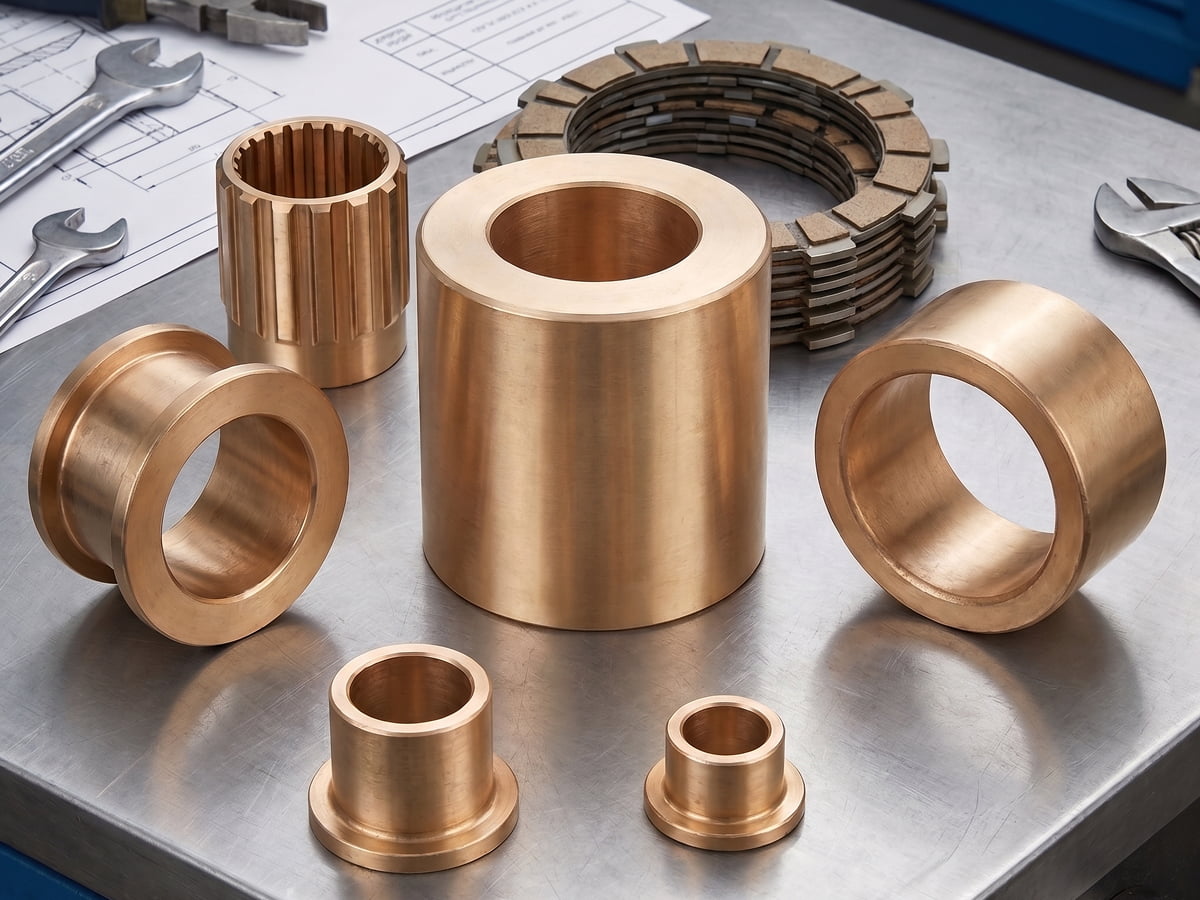
To ensure precise movement of moving parts in various mechanisms, it's essential to use guide components specifically designed for this purpose. Their operating principle is based on creating a reaction in the desired direction, but as is well known from school physics, this reaction is directly proportional to friction. In this case, friction has a negative, rather than positive, effect on the entire system, as it slows down reciprocating or rotary motion, thereby reducing efficiency, and, most importantly, leads to wear on the parts in contact with each other.
The more intense the process, the faster the abrasion, so engineers must take measures to reduce the negative impact on the integrity of the main components of friction assemblies. To achieve this, they first strive to reduce the coefficient of friction, which primarily depends on the viscosity of the material and the surface roughness.
Therefore, appropriate raw materials are selected and the surface texture is carefully smoothed through grinding and polishing. It turned out to be more practical to delegate these tasks to manufacturers, rather than to machine designers themselves, who strictly regulated the geometric shape, dimensions, and other technical parameters of products in strict accordance with the requirements set forth in the documentation of common state standards.
This approach gained widespread recognition back in the last century, when various manufacturers sought to standardize their own products with those of competitors and related companies, resulting, in particular, in the development of modern rolling and plain bearings. The latter are based on components specifically designed for operating conditions, simple in design, and inexpensive, such as bronze bushing, often manufactured directly at the metallurgical plant using specially designed equipment, which significantly reduces energy costs for the entire technological cycle from raw materials to finished products and thereby has a beneficial effect on the cost of the latter.
What are the advantages of a bronze bushing?
A standardized bronze bushing is guaranteed to fit various mechanisms, sometimes quite disparate in functionality, since they are designed to fit existing parts in the reference books, not the other way around. In addition to this important advantage for standardization and interchangeability, it also has other advantages:
- Bronze is a copper-based alloy, so it inherits many of its beneficial properties. For bearing assemblies, this primarily includes high thermal conductivity, which helps quickly remove excess heat from the working area to prevent dimensional changes due to thermal expansion and prevent thermal effects that alter mechanical properties.
- It is harder and less susceptible to wear, which was well known even in the times of ancient civilizations, when pure metal was practically not used to make tools.
- Removing and installing the mechanism into a hole or special mounting socket in the housing does not require much effort or complex equipment, so the presence of such an element has virtually no impact on the assembly and disassembly time of the equipment during scheduled maintenance and repair.
Analogues made from other alloys do not differ in their functional purpose, but due to some specific differences they are more suitable for solving certain problems.
Brass bushing
Very similar both in appearance and in most properties, brass bushing has a slightly higher viscosity, which allows for a smoother surface, but somewhat reduces the permissible pressure.
Cast iron bushing
If it is necessary to increase the support forces, use cast iron bushing, as the iron carbide included in the raw material for production is much harder than any copper alloy. While this naturally increases the load on the moving part and accelerates wear, the primary objective of protecting the expensive housing and ensuring precise movement is successfully achieved. Furthermore, cast iron is much cheaper than any non-ferrous metal, so its use, when used wisely, can reduce, rather than increase, the overall financial costs of creating and maintaining a complex mechanism over its long service life, enhancing its reliability and durability.