

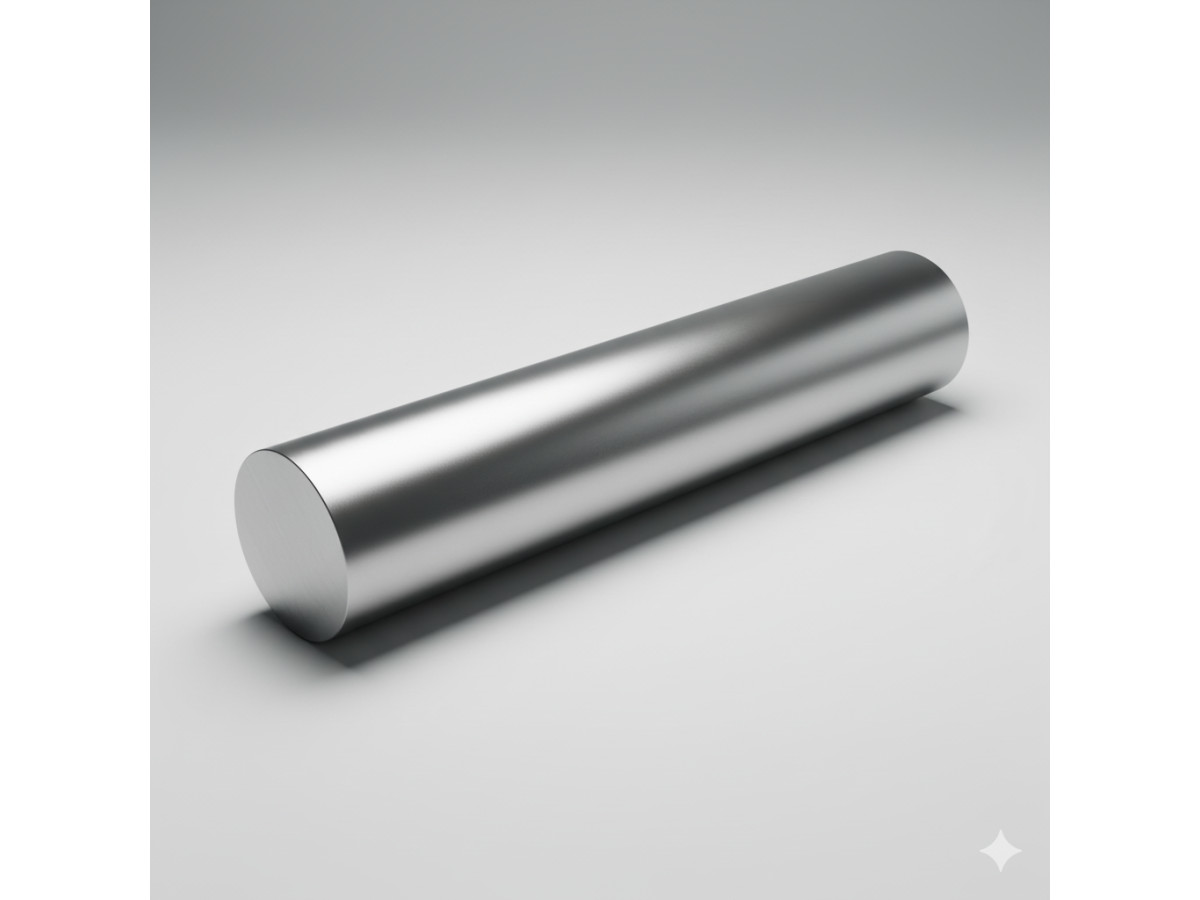
Modern machinery and mechanisms contain numerous rotating parts, resulting in a strong market demand for their manufacturing materials. When selecting materials from those provided by metallurgical plants, it is necessary to consider numerous factors affecting the overall operation of the system. Therefore, selection is one of the most important engineering tasks and often determines both the reliability and durability of the equipment and vehicles being created, as well as their final cost after completing all the necessary operations in the technological cycle. For example, the axles of automobiles and rolling stock rotate at a much higher angular velocity than their predecessors from the distant past, used in agricultural carts and horse-drawn carriages of cabbies and aristocrats. The greater the number of revolutions a component makes per unit of time, the greater the influence of centrifugal force among all the destructive factors affecting individual components of a mechanical system. For this reason, engineers take every measure to eliminate the possibility of imbalances in the mass distribution of rotating elements, and it is for this reason that they prefer calibrated steel circle as a source material for obtaining blanks for the manufacture of axles and shafts for vehicles and machine tools.
There are several objective reasons for this choice:
Through the calibration process, products achieve high accuracy in conforming to specified geometric dimensions and shapes, which differ from ideal by minimal allowances. Specifically, this type of ferrous rolled metal not only achieves a straight axis along its entire length, but also achieves near-perfect central symmetry. This ensuresequally distributedthe masses turn out to be completely balanced and the contribution of each conditionally allocated volume of the thickness of the part turns out to be completelycompensatedLocated opposite each other, the centrifugal force acting on the bearing assemblies is virtually eliminated. This feature also prevents the occurrence of unwanted oscillatory processes, particularly those that can cause annoying, uncomfortable vibrations, not to mention the potentially destructive consequences of resonance.
Another advantage of calibration is the simplified procedure for processing workpieces on lathes, since it can begin immediately at maximum operating conditions without preliminary roughing.
By choosing the steel grade used for production, the mechanical properties of the resulting parts can be varied widely. For some, wear resistance will be more important, for others, resistance to impact loads, for others, resistance to bending deformation. With a thoughtful approach, it's possible to realize all the plans envisaged in the calculations on paper.
For various reasons, the use of a calibrated steel circle may become unprofitable in a particular situation and it is replaced by similar analogs with similar characteristics.
Analogues of calibrated steel circle
If you plan to machine almost the entire surface of a part on a lathe, the advantages provided by calibration are simply unnecessary. In such cases, it is much more cost-effective to usehavingone and a half times less expensive hot-rolled steel circle This won't affect the quality of the resulting products, but will significantly reduce their cost, significantly increasing the competitiveness of the company's finished products and allowing the end customer to save considerable money on the purchase. In some cases, the desire to save on raw materials can be counterproductive, as effectively solving a problem requires increasing costs and purchasing a material with the required characteristics.
Stainless steel circle
As an example of one of them we can cite stainless steel circle, which costs more than twice as much as calibrated steel. It is essential in the creation of industrial and laboratory equipment for the food, chemical, medical, and other industries. This is due to its key feature: it does not react with the vast majority of chemically active substances, including acids, alkalis, and concentrated salt solutions.