

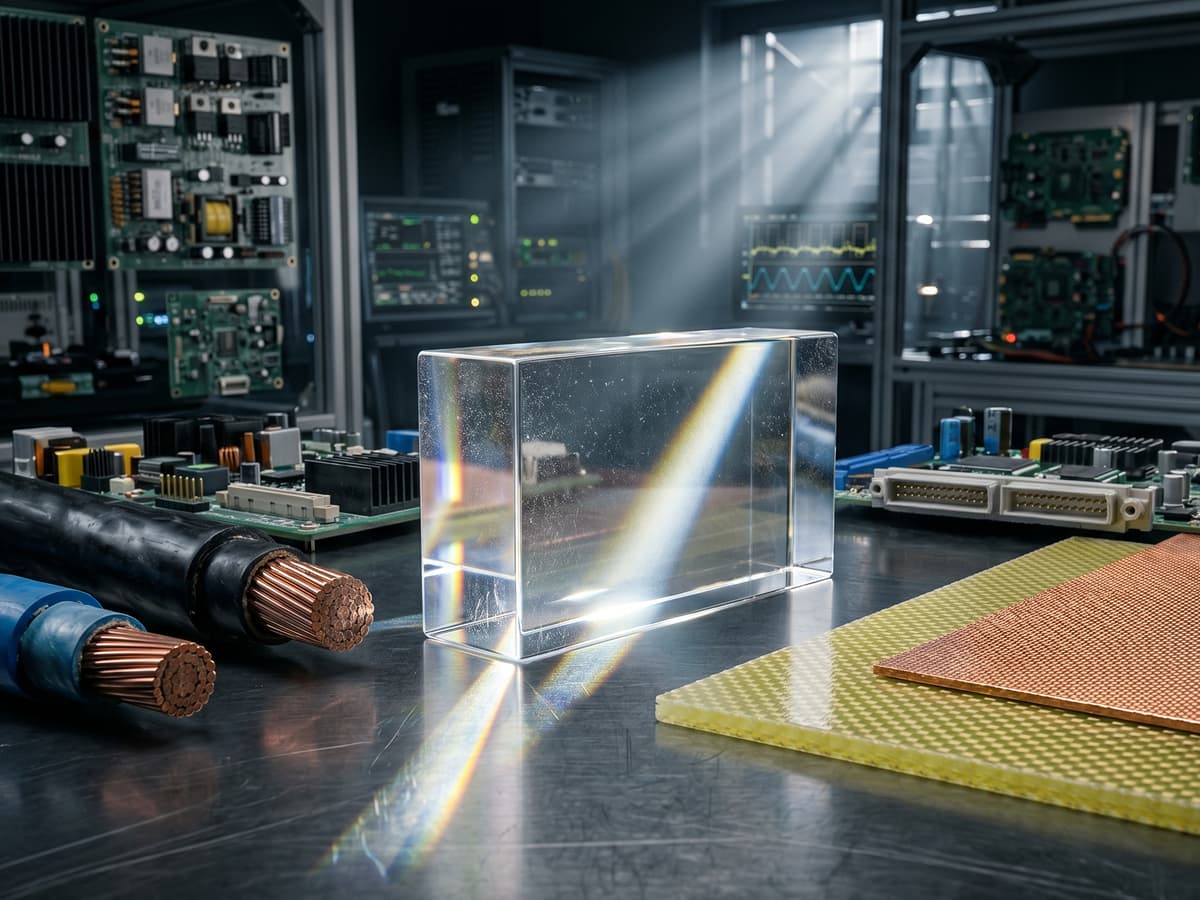
In the new millennium, various types of plastics have partially or completely replaced traditional materials in the construction industry. Therefore, in new buildings and renovated old ones, you are unlikely to encounter wooden window frames, slate roofs, and many other structures common to the mid- and late twentieth century. On the other hand, many materials in demand today can hardly be called new, as GOST standards for their production were developed fifty years ago.
However, back then, they were used primarily in highly specialized areas, while today, their scope of application has merely expanded significantly. First and foremost, this includes electrical engineering, where both good conductors and insulators are equally important for clearly dividing space into zones where electrical current flows with virtually no or no loss, thereby creating a clearly structured distribution scheme for power sources, consuming electrical appliances, switching equipment, and the wires connecting them in circuits. In this area, as decades ago, plastics are still in demand fiberglass, which has excellent dielectric characteristics.
Thin sheets coated with copper foil on one or both sides have become particularly valuable. These sheets are used to cut the initial blanks for printed circuit boards (PCBs) for the functional units of radio equipment. After drilling numerous holes for the pins of the radio components, applying acid-resistant varnish to the surface to connect them according to a pre-designed drawing, and etching, what remains is a set of narrow, flat conductive tracks, securely insulated from each other by the dielectric to which they are bonded.
This technology ensures the most compact placement of all necessary radio components on a single support base, significantly reducing the equipment's overall dimensions and the time required for its maintenance and repair.
Properties of textolite and other plastics
To increase mechanical strength, the reinforcing base is taken fiberglass, which is impregnated with a polymer resin composition and thermoplastically molded to produce finished products. This process produces custom-made, three-dimensional parts, as well as standard, universal sheets, tubes, and rods. They possess many remarkable properties:
mechanical strength in tension, compression and even bending allows it to cope with very impressive loads, including impact loads;
dark-colored graphite-filled varieties have excellent antifriction properties and are suitable for the manufacture of plain bearing parts, bushings, liners, and clutch and braking system discs;
Resistance to oil and high temperatures allows the material to be used for internal components of high-power power transformers with oil-cooled windings.
Despite the abundance of useful properties of fiberglass, some may be needed but are missing, and in such cases there is no choice but to resort to analogues.
Plexiglass (acrylic)
Among polymers, due to the isotropic interweaving of huge molecules into a single solidified mass, the latter is extremely rarely transparent. One of the few exceptions is plexiglass (acrylic) Due to its superior impact resistance compared to standard window glass, it is often used for glazing transport vehicles, including public trolleybuses, trams, and trains. It is also used to make beautiful frameless aquariums, as the raw material used is toxin-free. Due to its resistance to many chemicals, the material is often used in the creation of medical equipment and laboratory equipment that allow visual monitoring of internal processes. Its good dielectric properties allow for its use in electrical engineering, but due to its high cost, this is only used in cases of extreme necessity.
Polyethylene
In modern varieties of cable and wire products, you can increasingly find polyethylene, suitable for both direct insulation of individual copper or aluminum current-carrying conductors and for creating an outer protective sheath for multi-core cables. It is quite flexible and resistant to mechanical stress, impermeable to water, making it useful for underground electrical lines. However, it gradually degrades when exposed to solar ultraviolet radiation.