

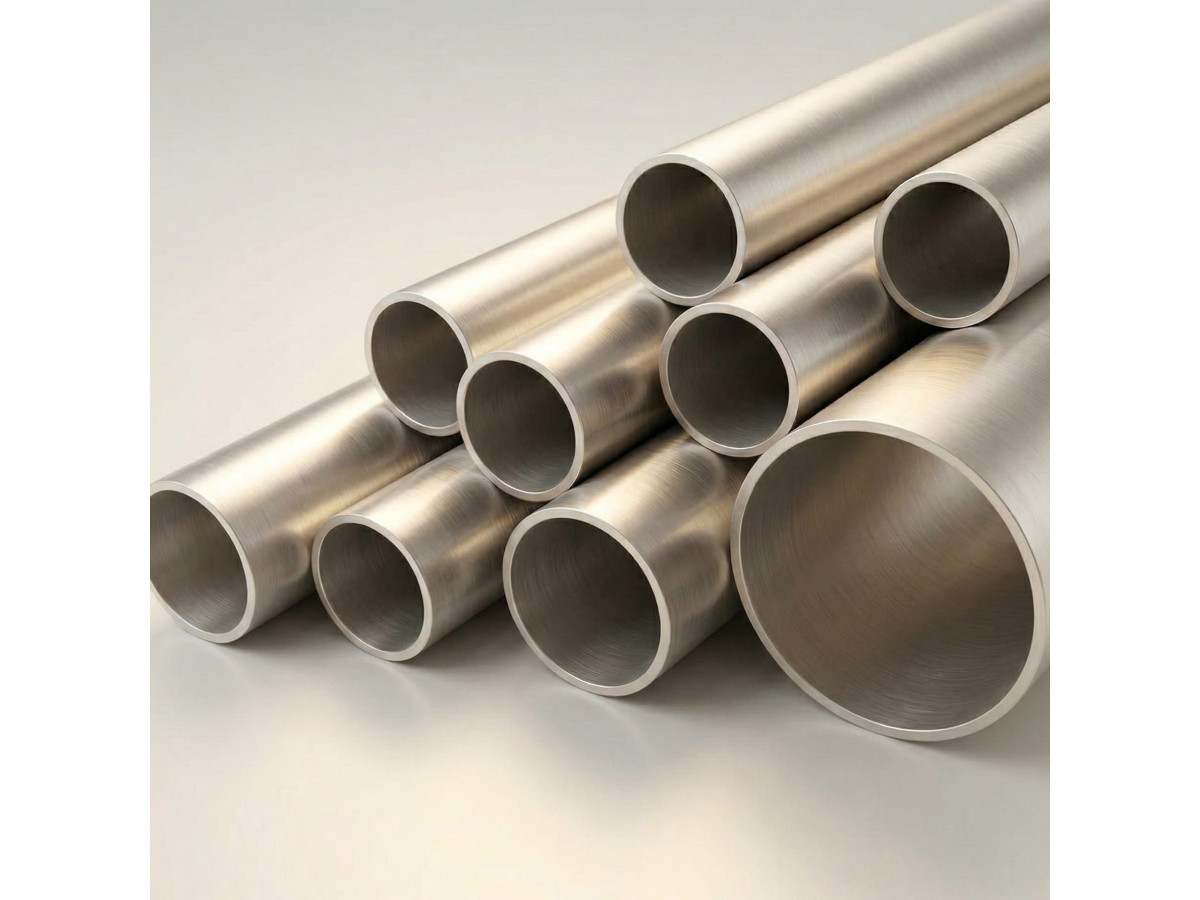
Under the general name galvanized pipe Typically, this refers to a whole group of ferrous rolled metal products produced by metallurgical plants. These products contain an internal cavity sealed from the environment, allowing various liquid and gaseous products to move freely along the central axis. At the final stage of the production cycle, all of these products are immersed in tanks containing molten zinc. After removal, some of the zinc does not flow back, but rather remains as a thin layer on the surface of the product. In the presence of an electrolyte, a galvanic cell composed of iron and zinc is activated, and a weak electric current flows between the electrodes, transferring electrons from the active metal to the more inert one. As a result, the former, to restore the balance, binds hydronium ions, and ultimately the metal transforms from a free state to a hydroxide, a process known as electrochemical corrosion. A more common manifestation of this process is the formation of rust on the surface of steel products, which, layer by layer, eats away the unprotected metal, rendering it unusable. Zinc, which absorbs the entire impact, protects the iron, which bears the main mechanical loads, in its entirety for many decades, thus ensuring reliable operation throughout the entire service life.
Classification of galvanized pipes according to technological methods of their production
The cheapest variety in terms of cost is round welded galvanized pipe, the production process of which can be broken down into several stages. Here are the main ones:
- First, a flat strip of small width and thickness is formed from a lump of still-warm and therefore ductile steel in a rolling mill. The values of these parameters and their pairwise combinations cannot be arbitrary, as they are strictly specified in the regulatory documents of the state standard, compliance with which is an integral sign of the quality of products from metallurgical plants.
- The still-moving strip after rolling is fed to a special machine, where it is bent into a long, hollow cylinder. The closed side edges are joined with a hermetically sealed longitudinal seam using automatic arc welding. This seam limits its use in high-pressure environments, as well as when bending the product transversely to its axis is necessary, as both cases increase the risk of wall rupture at the weld joint.
- At the final stage, as already noted above, the surface is galvanized by dipping it entirely into the liquid melt or by applying powdered zinc to the surface in chambers specially designed for this purpose.
It is distinguished by very close parameters and similar production technology galvanized water and gas pipe, in which the wall is formed from a steel strip bent at an angle relative to the central axis. When bent, its side ends are aligned not in a straight line, but in a spiral, which significantly increases strength, but also complicates the equipment design and requires more space for the process. These costs are associated with certain additional expenses, so the cost of such products is somewhat higher. There are also varieties that differ radically from those already described, one of which is discussed separately.
Profile galvanized pipe
Having a cross-section that is not round but square or rectangular galvanized profile pipe According to the laws of hydrostatics, it does not uniformly distribute pressure from liquid or gas across individual sections of the inner wall surface, so it is not used as a starting material for high-pressure pipelines. It is much more commonly used in the assembly of various metal structures as blanks for the fabrication of load-bearing frame members. This choice by engineers is driven by several factors:
- the presence of an internal cavity significantly reduces the weight in comparison with a steel square of the same external dimensions, which has a positive effect on reducing the loads introduced by its own weight;
- at the same time, the rigidity to bending deformations remains at a high level;
- The material can be easily joined using both welding and threaded fasteners.
When making a final choice of galvanized pipe type, it is recommended to prioritize the successful completion of the task first and only then compare prices.