

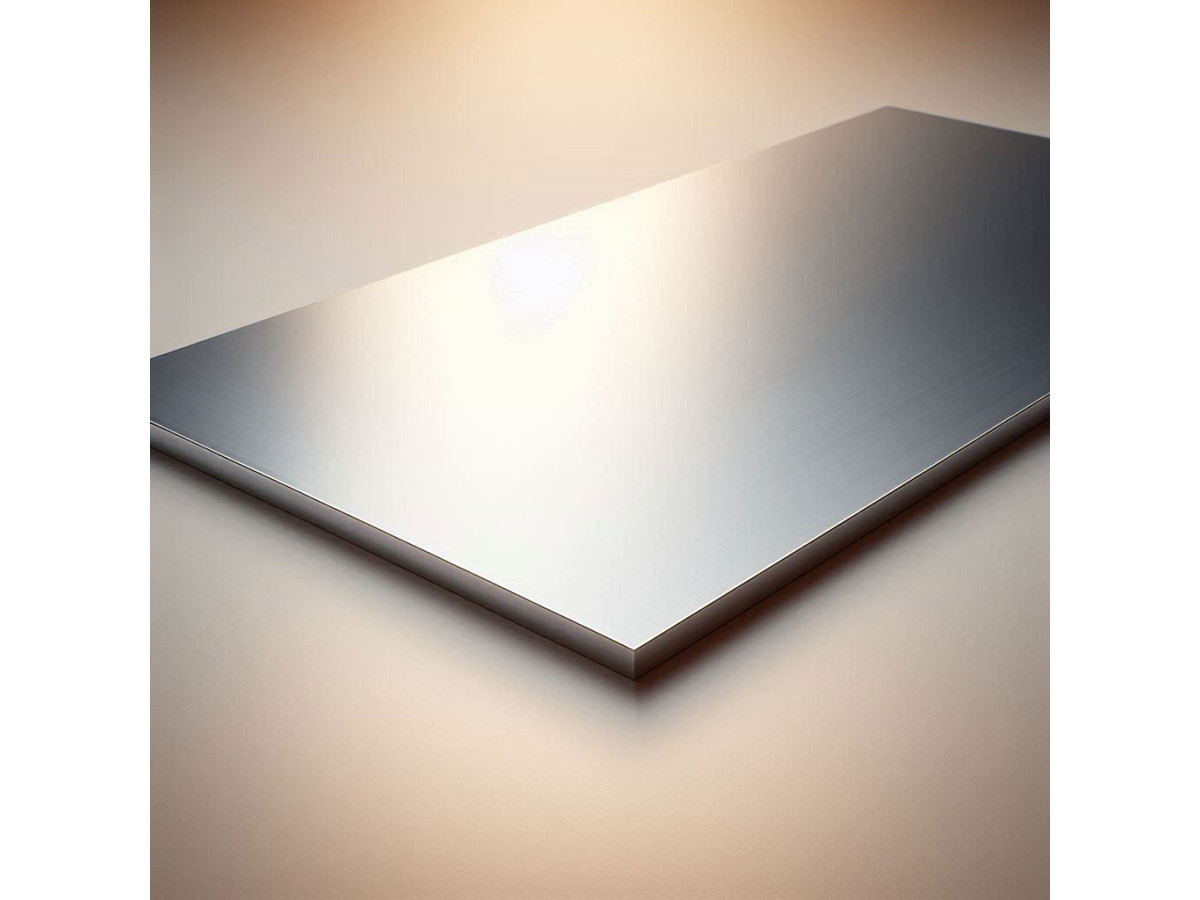
Produced by all metallurgical plants without exception, sheet metal is widely used as a raw material for the production of various components, of which there are countless thousands in modern technology. It is used to manufacture tanks of varying capacity for storing and transporting all kinds of bulk materials, liquids, and liquefied gases, it is used for vehicle body paneling, and is currently very often used in the construction of low-rise buildings and metal structures serving various functions. Often, the properties inherent in the cheapest examples prove insufficient for successfully solving a wide range of problems, so models with improved technical characteristics are used. One of these is rightfully considered stainless steel sheet, which is significantly more expensive than conventional steel, which is a type of ferrous rolled metal, but the additional costs of acquiring it are more than offset by the practical benefits and extended service life of the equipment and machinery created with its help.
How exactly is stainless steel superior to inexpensive steel?
In terms of mechanical properties, both varieties are roughly equivalent, so if resistance to various types of deformation is the only requirement, the cheaper metallurgical product is preferred for economic reasons. The situation is quite different when it comes to resisting chemical or thermal destructive factors, where stainless steel performs better and is sometimes simply indispensable. This is due to its numerous properties useful for use in harsh environments:
- The chemical and food industries primarily require materials resistant to active substances, as contact with them cannot be avoided during the manufacturing process of finished products and intermediate components. The relatively high percentage of chromium in the alloy ensures the formation of a dense and very thin oxide coating on the surface. This coating is exceptionally inert and prevents strong mineral acids, strong salt solutions, caustic alkalis, and organic molecules from damaging the underlying metal.
- The introduction of a significant amount of nickel as an alloying additive during smelting makes stainless steel highly resistant to thermal stress, significantly reducing its thermal conductivity. This makes it much more difficult to machine with metal-cutting equipment, but allows for extended use at both very high and low temperatures.
- Unlike ordinary steel, which lacks any particular artistic value, this type of sheet metal, with its excellent reflectivity and smooth surface even without polishing, has a very beautiful appearance. This can be seen in porch railings, stair railings, turnstiles, and many other elements found in public spaces. The roofs of wealthy country houses, religious buildings, memorial complexes, and other structures, easily visible from afar in sunlight, are particularly elegant.
To create the latter, stainless steel sheets tinted to look like copper, brass or gold are produced.
Tool steel sheet
Thanks to alloying technologies with a lower percentage content and a slightly different composition of components, metallurgical plants also obtain tool steel sheet, which, as its name suggests, is essential for the production of various tools and machine tool components. It ranks in the middle in terms of cost and is designed to solve a narrow range of problems.
Aluminum sheet
Due to the low density of the original raw material, the product obtained from it aluminum sheet It has a very low weight, which proves to be a valuable feature in vehicle construction, particularly in the aviation and aerospace industries. To increase strength, wear resistance, and expand the permissible temperature range, aluminum is alloyed with magnesium and titanium during melting. The product is distinguished by exceptional flexibility, which facilitates the production of parts with complex spatial configurations and significant relief variations by simple stamping using templates.