

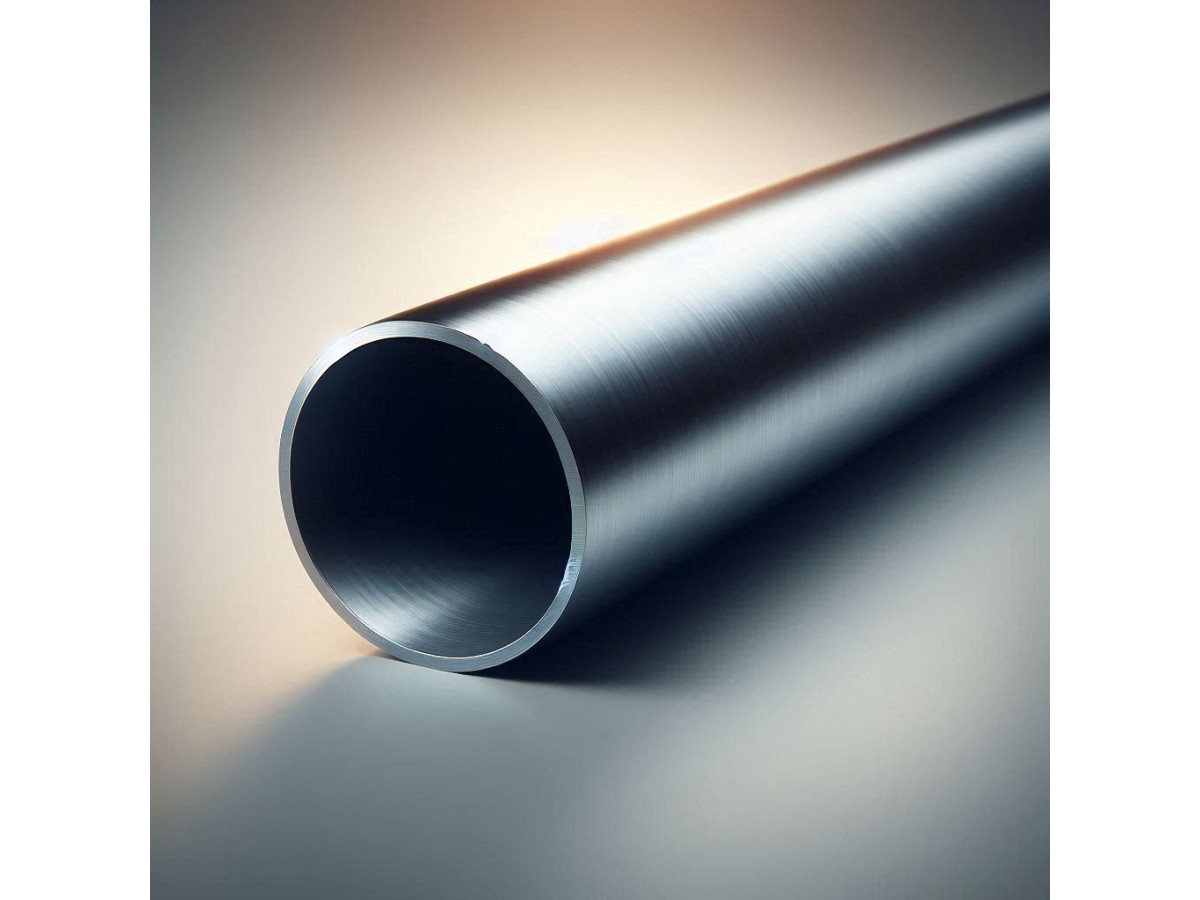
Reliable pipeline systems allow for the pumping of enormous volumes of liquids and gases from their intake points to intermediate processing points or end users, directly across rough terrain in any weather, regardless of climate zone or time of year. They do not emit harmful exhaust gases into the atmosphere, do not create deafening noise, do not threaten to kill an unwary pedestrian, and instead perform their useful work unnoticed, without interruption. However, all of this applies only to reliable transport systems, since if an emergency occurs, there will be irreparable environmental damage from the release of contents, unnecessary energy waste, a significant reduction in productivity, and even a threat to the lives of people in the immediate vicinity of the rupture. For this reason, designers highly value materials that are readily available and ensure trouble-free operation for many decades. Among the products supplied to the market by metallurgical plants, [the following is a translation:] round cold-rolled steel pipe, which has a number of properties useful for solving complex problems.
Let's look at some of them in detail:
- The wall forming the product has a solid structure, making it significantly stronger than similar products with welded seams. Furthermore, resistance to bursting under internal pressure from the pumped product is enhanced by its uniform distribution due to the equal distances from the central axis to the surface. Its advantages are even more pronounced when the product must be bent at an angle, as such deformation creates significant internal stresses that can compromise the seal, particularly at weak points in the edge joints.
- To achieve a cylindrical shape, blanks are rolled on special machines at ambient temperature. Unlike hot rolling, this prevents the formation of brittle scale on the surface due to air oxidation that distorts the iron's geometry. There is also no thermal restructuring of the internal crystalline structure, so the metal grains are ultimately somewhat stretched in the direction of the applied force during the process cycle. These properties prove useful when turning or threading various parts.
- The raw material most often chosen for production is simple, inexpensive structural steel. It welds very well using an electric arc or a gas torch flame, producing a very strong transverse weld. This eliminates the need for complex and expensive line current converters, nor for bulky inert gas cylinders to protect the metal from intense oxidation.
Although round cold-rolled steel pipes are more expensive than welded alternatives due to the significant energy required to complete the process cycle, they can significantly increase the reliability and durability of the systems being created.
Replacement options for round cold-rolled steel tubing
The closest in capabilities and cost to cold rolled steel is round hot-rolled steel pipe Its advantages and disadvantages have already been briefly mentioned above, so more attention should be paid to other types of ferrous rolled metal.
Water and gas steel pipe
Having a spiral seam water and gas steel pipe It is manufactured from flat steel strip by bending it along a specified path and then automatically securing the joined edges together using electric welding. This production technology reduces both the cost of the finished product and its suitability for use in challenging conditions. With small diameters, the product bends satisfactorily at right angles when heated, making it widely used for installing terminals, risers, and run-down pipes with numerous bends inside buildings.
Boiler tube made of corrosion-resistant heat-resistant steel
For the production of heat exchangers for centralized and individual power plants, it is currently widely used boiler tube made of corrosion-resistant heat-resistant steel As its name suggests, it can withstand both open flame and superheated water vapor for extended periods of time, maintaining its integrity under intense chemical and thermal influences..