

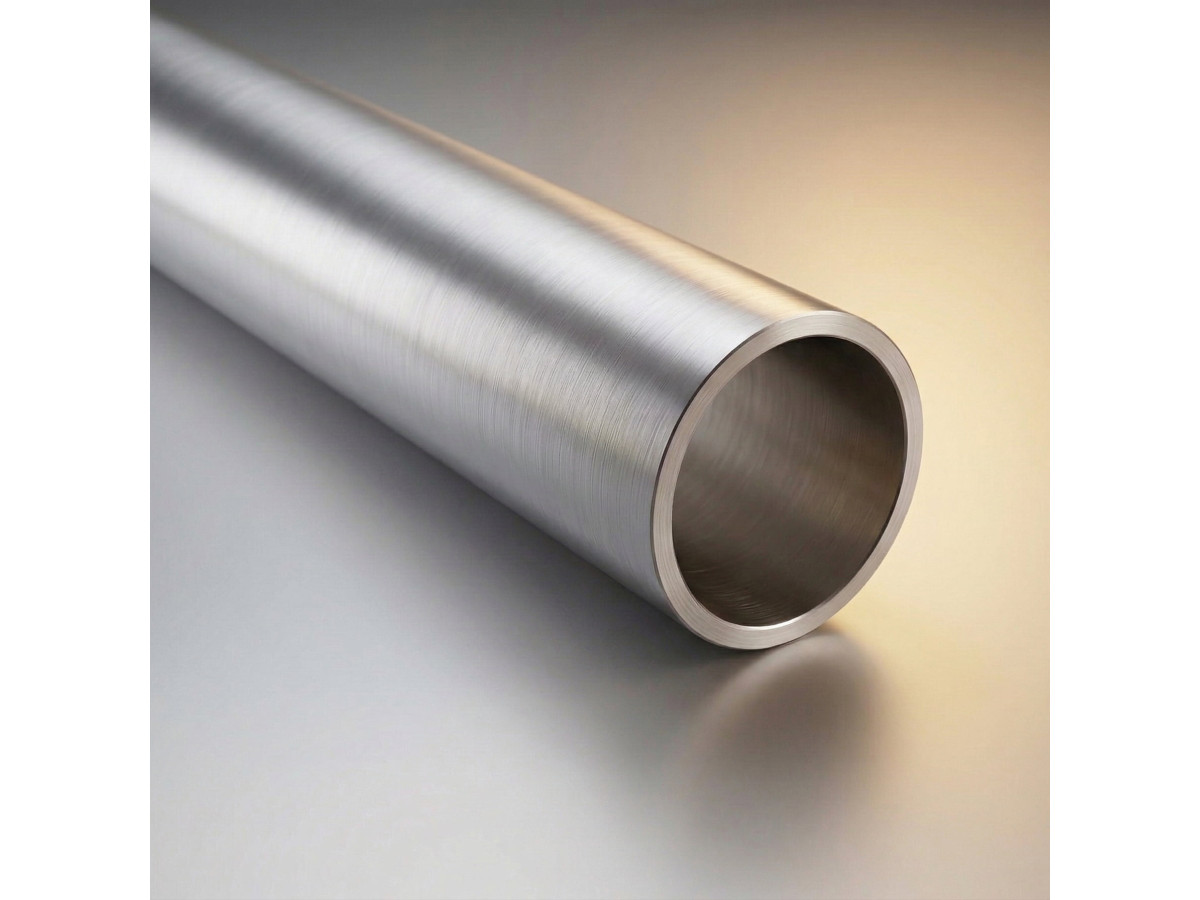
The manufacture of certain components of domestic and, especially, industrial refrigeration equipment requires materials with unique properties capable of effectively performing their functions under extreme conditions. Among the standard products of metallurgical plants, these include seamless stainless steel pipe 08Х18Н10, which possesses cryogenic properties and maintains stable technical characteristics even in extreme cold. This feature proves extremely useful in the creation of a wide variety of units, examples of which include:
stationary and mobile freezers for deep freezing of certain food products;
installations for producing liquefied gases such as liquid oxygen, nitrogen, carbon dioxide;
laboratory instruments for studying the behavior of superconductor candidates when cooled to low temperatures.
The vast majority of metals become too brittle when cooled severely, and microcracks appear in products made from them even without mechanical or impact loads due to thermal stresses arising in the crystal lattice. These gaps allow circulating gases to escape freely into the surrounding space, which at best will only render the equipment inoperable. In the worst case, the situation can become life-threatening if the toxicity of substances escaping from the confined space exceeds permissible limits.
Some analogues of seamless stainless steel pipes made of 08Х18Н10 steel used for other purposes
In practice, a much more common problem, also directly related to thermodynamics but essentially inverse, is not cooling the coolant to low temperatures, but rather heating it to high temperatures. Here, thermal expansion also plays a significant role, not on the walls themselves, which do not lose viscosity under such conditions, but on the connecting welds, which lack sufficient mechanical strength. Furthermore, when exposed directly to open flames or hot combustion products of various types of organic fuel, the heat resistance of the alloy becomes extremely important, usually achieved by introducing significant amounts of refractory metals as alloying additives. Resistance to chemical oxidation in aggressive environments at high temperatures is also of paramount importance, and can be improved by forming thin, tightly adhering oxide films on the outer surface of the metal. All of these conditions are fully satisfied by [the term "alloy" in Russian seamless stainless steel pipe 10Х23Н18, which is produced using raw materials with very high chromium and nickel content. The high cost of these metals significantly increases the cost of products made with them, but the benefits of reliable and durable operation of boiler systems and the chimneys that serve them fully offset the slightly higher initial costs of purchasing high-quality heat exchange equipment. Less expensive alternatives are available, which are discussed in separate sections.
Round welded stainless steel pipe
The cheapest product in this rental group is round welded stainless steel pipe For two reasons. The first is quite simple and lies in the lower content of expensive alloying components. The second is related to a less energy-intensive production technology, as rolling a lump of steel into a strip, then rolling it and welding the edges is less expensive than deforming it directly into a solid-drawn hollow cylinder with much stronger seamless walls. The resulting technical characteristics are quite sufficient for use in food production facilities with modest loads but very critical safety requirements. Also, thanks to its attractive, age-resistant appearance, this type of rolled metal is widely used as a structural material in the manufacture of fixtures for public spaces.
Flat oval stainless steel pipe
Another acceptable option for assembling metal structures is flat oval stainless steel pipe, which, unlike its round counterparts, due to its asymmetric shape, when rotated 90 degrees around the central axis of the direction of the applied transverse forces, shows varying degrees of rigidity and resistance to bending deformation.
The final choice of name depends primarily on the specifics of the task, and the price is secondary.