

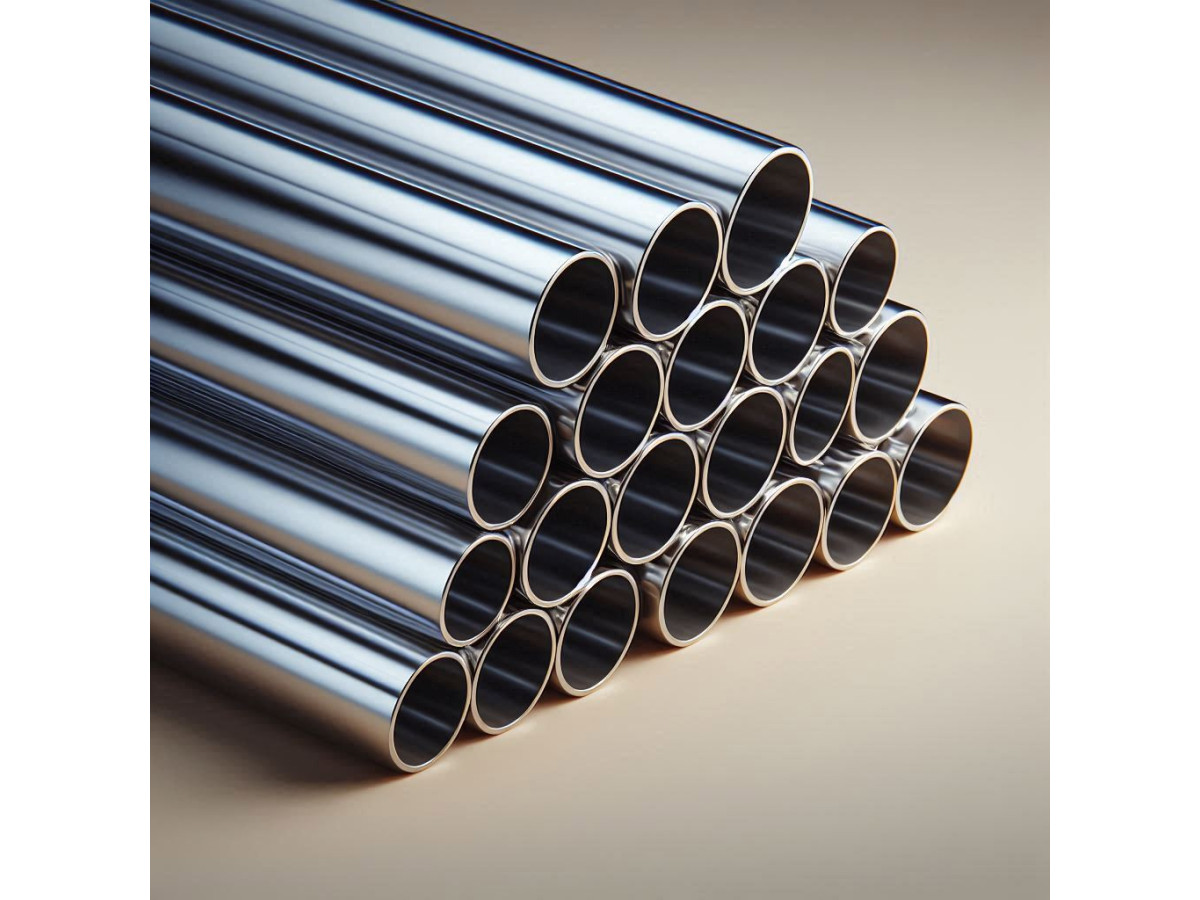
Modern boiler equipment contains components that not only come into contact with red-hot fuel, but are constantly exposed to white-hot, much hotter flame particles. Under such conditions, ordinary cast iron wouldn't be able to maintain its integrity for even a few years. Add to this the need to significantly reduce the thickness or make the product airtight, as well as allow liquid or gas to pass through it under high pressure. The inadequacy of traditional materials from the last century for such tasks becomes obvious. Modern boiler systems often use heat exchangers that are regularly exposed to fire, ensuring constant circulation of a coolant seamless stainless steel pipe 10Х23Н18 (AISI310S), which allows you to achieve excellent results in solving complex engineering problems.
Analogues for replacing seamless stainless steel pipes 10Х23Н18 (AISI310S) in other areas of application
The functional purpose of seamless stainless steel pipes grade 10X23H18 (AISI310S) in heat exchange systems can be divided into several fundamentally different areas. Here are the most important:
- First and foremost, this involves extracting thermal energy from the combustion products of organic fuels, heated to high temperatures, and transferring it to the heat carrier that transports it to the end user. The faster this process occurs, the higher the efficiency of the entire system, as the heat generated in the furnace will be transferred to heating radiators inside distant buildings, rather than being diverted directly into the chimney. To achieve this, it is useful to reduce the thickness of the wall separating the two media, slowing the flow of the former and accelerating the latter. The properties of the material in question cannot influence the latter factor in any way, but engineers have long since learned to accurately calculate the optimal balance between thermal conductivity and resistance to flow-accelerating pressure, proportional to thickness. Therefore, products of this type were standardized at the national level back in the last millennium.
- Preventing loss of tightness at the joints of individual parts involves minimizing the coefficient of thermal expansion, which, when heated strongly, can lead to the occurrence of significant mechanical stresses within the pipeline system.
- Preventing chemical degradation of metal under the influence of very high-temperature active substances. This is perhaps even more important for chimneys that exhaust combustion products into the atmosphere than for coils exposed to the fire, as they contain significant amounts of acid-forming phosphorus and sulfur oxides.
It is worth saying a few words about cheaper analogues that can effectively solve less complex but equally important tasks.
Seamless stainless steel pipe 08Х18Н10/12Х18Н10Т (AISI304, AISI321)
Having a slightly lower price seamless stainless steel pipe 08Х18Н10/12Х18Н10Т (AISI304, AISI321) It has proven useful for installations with the opposite purpose, namely, refrigeration equipment. Due to the unique properties of cryogenic steel used as a feedstock, products can withstand prolonged periods of extreme cold without losing strength, which is crucial for many processes used to produce liquefied gases, including nitrogen, oxygen, argon, propane, and many others.
Seamless stainless steel pipe 10Х17Н13М2Т (AISI316)
It's even cheaper seamless stainless steel pipe 10Х17Н13М2Т (AISI316), which also boasts considerable heat resistance and can serve as a good alternative for the production of less demanding individual boilers. During the construction and modernization of private homes, it is often used as the base material for installing upright chimneys in fireplaces that are less frequently used and have lower power and efficiency.