

Gaseous substances of natural and artificial origin are widely used in modern economic activity, therefore the tasks of their extraction, transportation and practical application are becoming increasingly important. At the moment, there are fundamentally different approaches, one of which is associated with the movement of thousands of kilometers from natural gas fields to consumers along a branched network of pipelines in an unchanged original state, and the second provides for compaction to a liquid state for transportation in various types of tanks.
The second method is the main one for individual components of air divided into fractions, which is present in sufficient quantities everywhere in approximately the same composition, as well as products obtained during chemical reactions or electrolytic decomposition of salts. Industrial production of liquefied gases is associated with a number of technological processes occurring in very difficult conditions for equipment, among which the main role is played by compression under very high pressure.
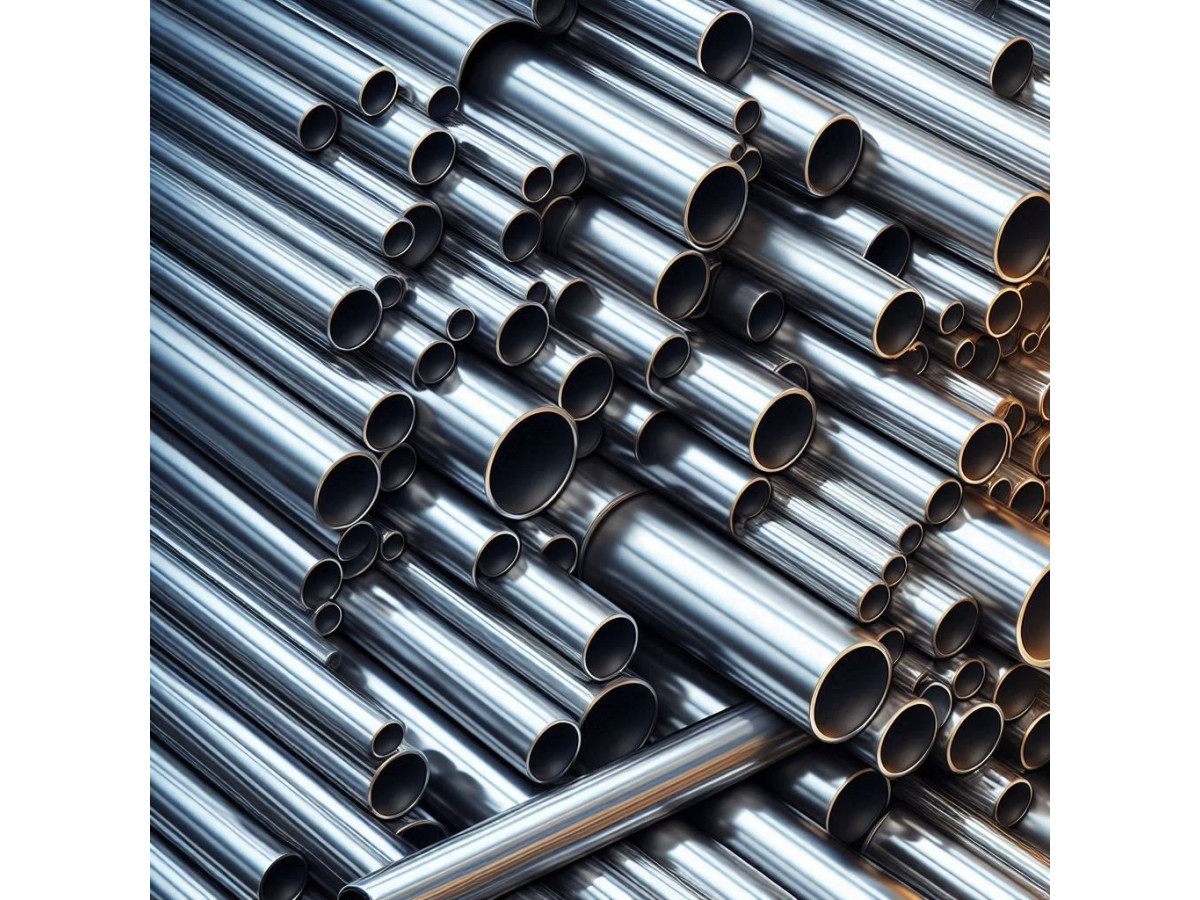
During the evaporation of liquid nitrogen, oxygen, argon, chlorine, ammonia, carbon dioxide, a huge amount of energy is taken from substances in the surrounding space, so they are strongly cooled. In conditions of extreme cold, the vast majority of construction materials lose their inherent useful properties at normal temperatures and become unsuitable for practical use seamless stainless steel pipes 08Х18Н10/12Х18Н10Т (AISI304, AISI321), made of cryogenic steel and capable of reliably performing the functions assigned to them in the range from -190 to 600 degrees.
Analogues of seamless stainless steel pipes 08Х18Н10/12Х18Н10Т (AISI304, AISI321)
In boiler plants and turbines, parts are not subject to cooling, but rather to strong heating and are subject to significant thermal expansion and activation of the impact of even inert substances under normal conditions. In order to be able to cope with such problems, metallurgical plants produce seamless stainless steel pipes 10X23N18 (AISI310S) made of high-alloy austenitic steel. They have very important advantages for their application:
- the ability to maintain mechanical strength at temperatures up to 1000 degrees;
- exceptional resistance to corrosion;
- stable crystal lattice;
Since the amount of alloying elements in them is greater than in the above-described type of ferrous rolled metal, their cost is 20% higher, but the initial costs for purchasing materials are fully recouped by the long-term and very reliable operation of the equipment.
Seamless stainless steel pipes 10Х17Н13М2Т
Equipment for the chemical industry and laboratories often operates at normal temperature conditions, so the materials used to manufacture it do not require increased heat resistance. Cheaper than the analogs described above seamless stainless steel pipes 10X17N13M2T (AISI316) are quite suitable for creating cold synthesis units, since they do not react with the vast majority of chemically active substances. This is due to the formation of a dense layer of chromium oxide on the inner and outer surfaces of the walls, which acts as a barrier between the steel and the environment. It does not interact even with very strong reagents, such as:
- phosphoric, dilute nitric, sulfuric and hydrohalic acids;
- acid-forming non-metal oxides;
- caustic alkalis, ammonia;
- hydrocarbons and other organic molecules contained in oil and natural gas.
The solid-drawn wall allows for long-term operation under a given pressure with a smaller thickness, which allows saving money on purchasing the required footage with a minimum weight of all products included in the batch.
Round welded stainless steel pipes
In the food industry, very high temperatures and pressures are practically not encountered. This allows the successful use of even lower-priced round welded stainless steel pipes (AISI304). They are not oxidized by the components included in the raw materials for food production, so they do not contaminate food with rust particles and toxins. Also, dirt almost does not accumulate on their smooth surface, so it is quite easy to keep the equipment clean. With a reasonable approach to setting the task, the range provided will always allow you to select a material for its solution.