

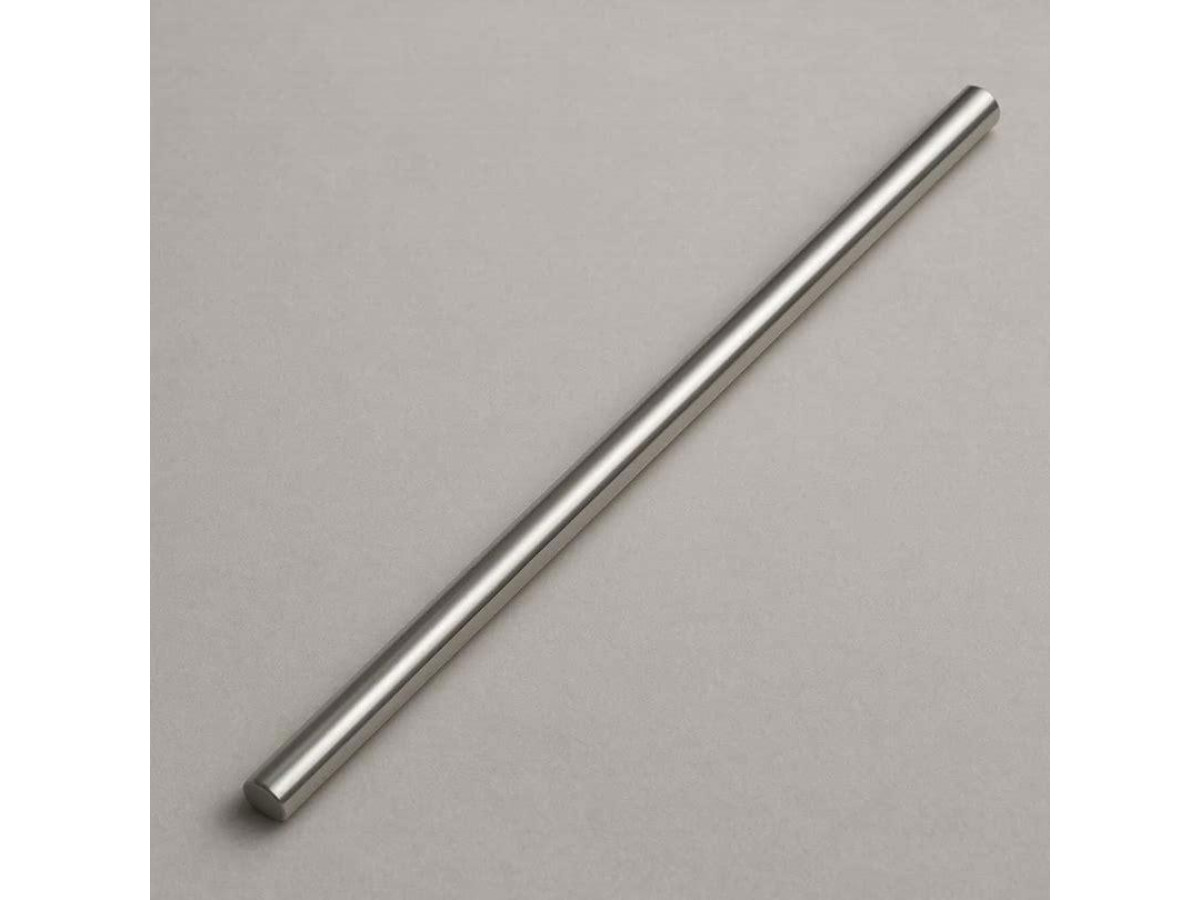
In the mechanical engineering industry, the manufacturing process for many vehicle parts and various equipment includes turning to produce rotating bodies of various geometric shapes and sizes. Before subsequent milling, grooving, threading, and drilling operations, all of these bodies share a common characteristic: symmetry around the central axis. This ensures uniform mass distribution and smooth rotation without the risk of shocks and vibrations that can damage the drive shaft and bearing assemblies of the machine.
These shocks are typical when imbalances occur during the initial stages before roughing irregularly shaped workpieces inserted into the chuck. Cylindrical products included in the ferrous rolled metal group are free from this drawback, as they are manufactured according to standards that predetermine the capabilities and features of the machine tool. In particular, stainless steel circle Already at the metallurgical plant, it has a perfectly round cross-section and is specially designed for obtaining various parts by processing blanks from it on lathes and other metal-cutting machines.
Among the technical parameters inherent to this product, the most important are the following:
- The presence of hard chromium as an alloying component in the raw material for production requires the use of special carbide-tipped cutters, as conventional ones are ineffective and quickly become dull and wear out. Tungsten carbide-based tools can achieve good results, but working with them requires careful calculation and adherence to cutting conditions.
- Even a small amount of nickel in the alloy dramatically increases its heat resistance, and this value increases rapidly as the amount increases. This also leads to difficulties during metalworking, as the workpiece itself can withstand the heat better than the tool removing the chips. Under such conditions, it is necessary to reduce the shaft speed and feed rate, and to use special emulsions to cool the work area effectively to remove the resulting excess heat.
- Vanadium, manganese, molybdenum, and other microadditives affect many alloy properties, such as toughness, wear resistance, and thermal stability. Their influence should also be considered when selecting tools and the conditions used in finishing the blank to the desired configuration.
Despite the comparative difficulty of processing stainless steel rounds and their high cost, they are the preferred raw material for manufacturing food and medical equipment components. This is due to the absence of toxic compounds in the metal itself and the inability of chemically active substances to form them through oxidation-reduction reactions upon direct contact.
Analogues of stainless steel circles used for solving less critical tasks
If the requirements for chemical inertness and heat resistance of the material for manufacturing parts are not so high calibrated steel circle Stainless steel is the best substitute for stainless steel. It's several times cheaper, manufacturing finished products from it is simpler and less expensive, both in terms of expensive tools and the energy consumed per production cycle. Its mechanical strength is nearly equal to that of its more expensive counterpart. Other stainless steel substitutes are also available to meet specific needs.
Brass circle
Belonging to the group of non-ferrous rolled metal products brass circle Brass is widely used as a raw material for producing all kinds of electrical equipment components. Its electrical conductivity is only slightly lower than that of copper, but it significantly surpasses copper in hardness and wear resistance, which is crucial when creating moving parts subject to friction. For this same reason, brass is used to manufacture high-quality spherical, conical, and cylindrical components of shut-off and control valves, as well as housings with mounting sockets for their installation.
Titanium circle
Like sheet titanium, it is often used as a base material in the aviation and rocket and space industries titanium circle For these applications, its most valuable properties are low density, mechanical strength, and increased resistance to thermal effects over a wide range of operating temperatures.