

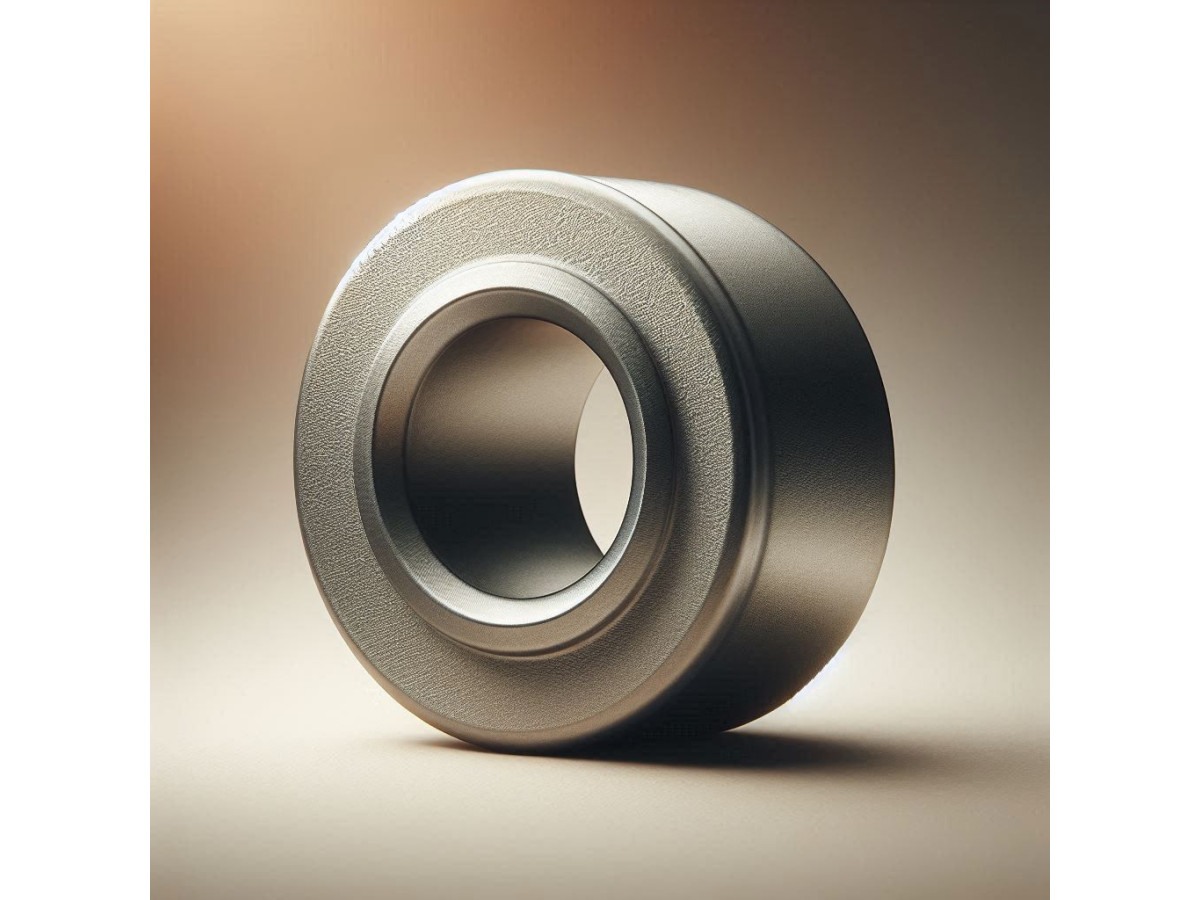
Absolutely free movement on Earth doesn't exist, as even bodies falling from heights overcome air resistance, which increases with increasing velocity. Aircraft designers must carefully consider this factor in their calculations, so what can we say about liquids and solid surfaces, which are denser than gases? Their impact on a moving body is many times greater, so materials capable of mitigating these negative effects are urgently needed in various fields of technology. They are especially important for bearing assemblies of all kinds, as they often bear the brunt of the frictional loads. Roller and ball bearings offer certain advantages, but systems based on sliding principles also have their own, so each type is preferable for solving a range of general and specific problems. A bearing assembly is often used as a component of the latter cast iron bushing, which belongs to a group of standardized products from metallurgical companies. Casting technologies widely used in the ferrous metallurgy industry are used to produce the primary blanks, and final finishing of the geometric shape and dimensions is performed using various metalworking equipment.
What are the beneficial properties of a cast iron bushing?
Let us list the most useful properties of cast iron bushings for practical application:
- Cast iron is much harder and more wear-resistant than conventional, inexpensive steel, and its main drawback, brittleness, is negligible in this case, as the component does not bear any impact loads. These properties significantly increase the reliability of the component and its service life, which is beneficial not only from a purely technical but also from an economic perspective.
- In applications involving intense interaction between contacting elements, the coefficient of friction between them becomes crucial as their relative speed increases. Due to the relatively high antifriction properties of cast iron, sliding in bearings becomes much easier, especially after introducing lubricants into the minimal gaps between the moving and static elements relative to the entire mechanism. These lubricants include mineral oils or pastes based on soft graphite, which has a unique crystalline structure that allows entire layers of atoms to easily slide along adjacent layers.
- When performing scheduled maintenance or emergency repairs, the ease of dismantling worn-out components and installing new ones in their place is crucial. With the parts described, this is a no-brainer, allowing for high-speed operations without requiring highly skilled mechanics or complex, expensive equipment.
Depending on the design features of the bearing units and the requirements placed on them, in some cases, analogs made from other materials are used, which are discussed in separate sections.
Bronze bushing
According to its purpose bronze bushing It is no different from a cast iron one and serves as a supporting guide element for rotating shafts or reciprocating cylindrical rods. For the latter case, through-hole models are used, while for the former, blind ones are most often used. In the latter case, the part is essentially no different from a cup with a bottom, which prevents lubricant from leaking out, eliminating the need for seals that wear quickly and are unable to withstand excessive pressure. For installation in housing seats drilled through the body, a so-called skirt, resembling a flat washer integral with the body, acts as a stop to prevent inward displacement.
Brass bushing
Less hard, but with even greater anti-friction properties brass bushing It proves useful at high speeds of the shaft it supports. Like bronze, brass is a copper alloy and therefore has high thermal conductivity, allowing it to quickly and effectively dissipate excess thermal energy generated during intense friction into the surrounding space, thereby preventing mechanism seizure due to thermal expansion.