

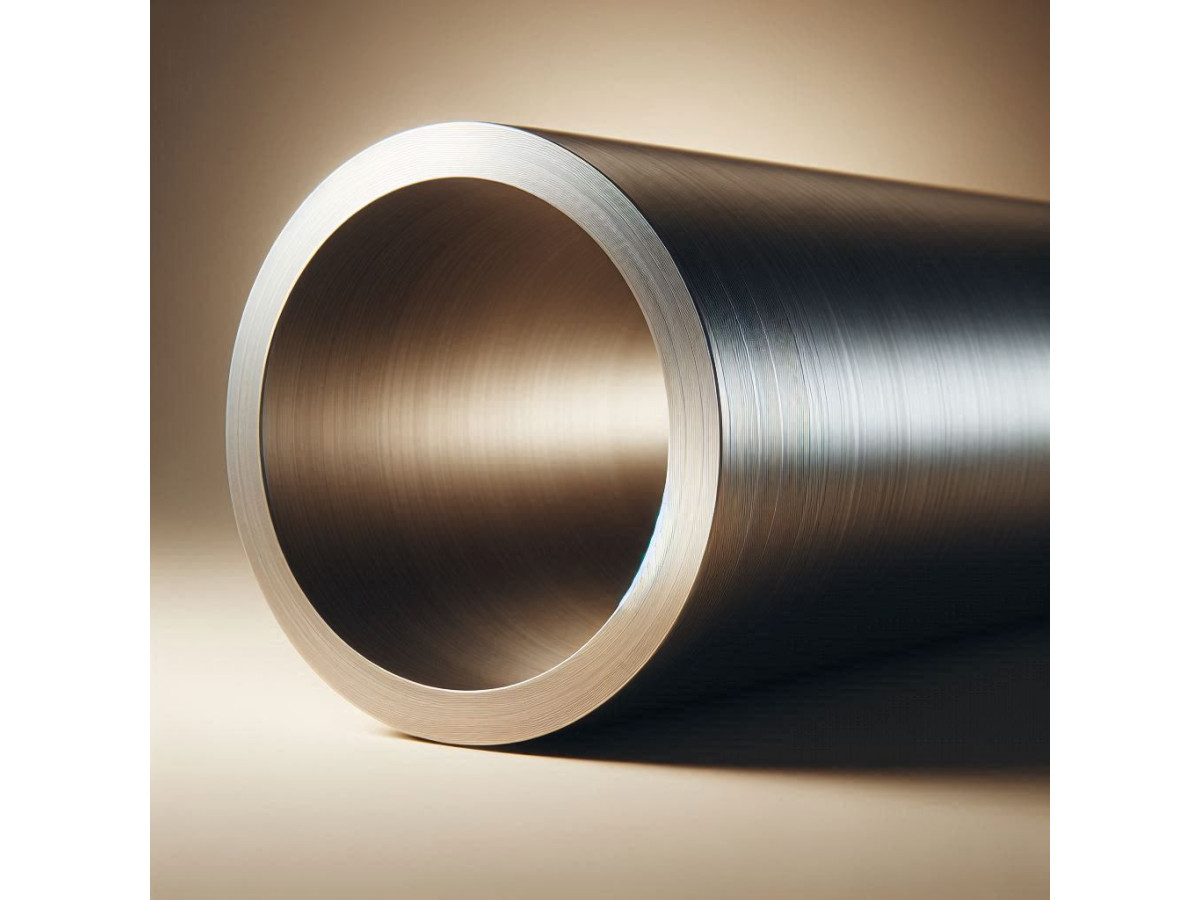
By increasing the productivity of pipeline transport systems, it's possible not only to maximize the freight flow supported by each pipeline but also, by increasing efficiency, to significantly reduce the energy costs of pumping a fixed unit volume of liquid or gas. This requires increasing the pressure generated by the pumps, which increases the internal load on the pipeline. This typically doesn't pose any problems during pipeline construction, as the wall thickness and structure can be selected with a margin during engineering calculations at the design stage. Difficulties begin to arise after several years of operation, as there is also the environmental influence of the outside environment. Left unprotected, this can slowly but surely erode seemingly strong metal through slow-moving corrosion, converting it layer by layer into loose, crumbling rust. Eventually, a point of weakening is reached, beyond which the wall, which until recently effectively resisted the mechanical loads exerted by the pipeline from within, loses this ability and begins to tear in various places. Patching holes is of little help, as after one leak is fixed, another one will form in some adjacent section, requiring the entire thing to be replaced, which is quite costly in terms of both materials and labor. It's far more cost-effective to anticipate the possibility of such problems and, if the risk is too high, choose a more reliable option, such as galvanized pipe During the final stage of the production process at metallurgical plants, it is dipped into a container of molten zinc. A thin layer of zinc remains on the surface after the main mass has drained, forming a galvanic cell with the iron that continuously functions in the presence of an electrolyte, such as moist air. As a result, over the course of many decades, only the metal that is more active in electrochemical reactions corrodes, while the metal that bears the brunt of the mechanical stresses maintains its integrity, ensuring the system's reliable, uninterrupted operation over a very long period.
Comparison of galvanized pipes with similar products
Most often, galvanized pipe is formed by bending thin sheet metal into a hollow cylinder, then joining the converging edges using automatic arc welding. The resulting longitudinal seam is the weakest point, and when pressure exceeds a critical value, the wall ruptures along this seam. Therefore, if it is necessary to extend this seam, it is better to use stronger alternatives as the starting material for pipeline construction.
Round cold rolled steel pipe
The one with solid drawn walls has very high strength characteristics round cold-rolled steel pipe Tangential rupture requires several times greater force, so its use is preferable in relatively dry areas, as both options are approximately equivalent in cost. Varieties formed by hot rather than cold deformation also have very similar parameters, but both are not resistant to electrochemical oxidation and, under conditions favorable for intense corrosion, rapidly degrade externally.
Seamless stainless steel pipe 08Х18Н10/12Х18Н10Т (AISI304, AISI321)
When high mechanical strength and increased chemical resistance are required at the same time, it may be useful seamless stainless steel pipe 08Х18Н10/12Х18Н10Т (AISI304, AISI321) Another valuable quality is its very wide operating temperature range, as it is resistant to both extreme cold and extreme heat. All these remarkable properties are a result of the introduction of alloying components into the melted raw material:
- chromium to form an oxide on the surface that is very inert to almost all reagents;
- nickel to impart stability to the crystal atomic lattice under thermal influences;
- titanium, copper, manganese and other useful elements.
Due to the listed properties, these products are widely used in the chemical and food industries, as they eliminate the possibility of unwanted reactions with almost all substances.