

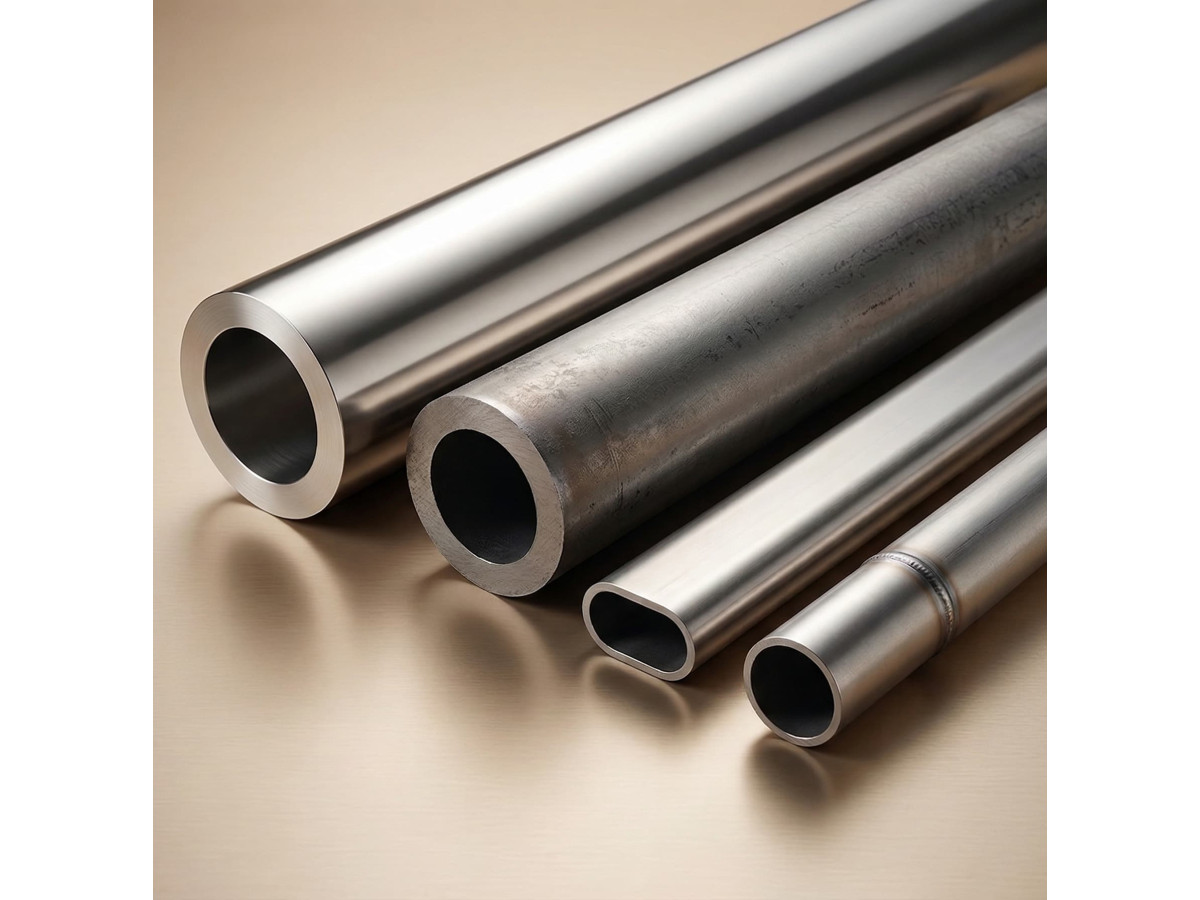
Transport systems for pumping liquid and gaseous products for industrial purposes annually move millions of tons of useful cargo from their extraction sites to intermediate processing plants and end consumers. A tree-like structure of main pipelines and laterals, quietly and unnoticeably to an outside observer, without stopping for a second, reliably meets the needs of industrial plants for raw materials for the production of various products and city residents for fuel for stoves, water for drinking, cooking, and washing, and heat during the cold winter seasons. For modern people, the prolonged shutdown of even one such network not only causes significant inconvenience and entails significant economic losses, but under certain circumstances can even pose a real threat to life. Therefore, when designing each section of a pipeline, its capacity and the loads permissible to support it must be carefully calculated in order to select the right materials for its construction. For high-pressure main lines and laterals, a system of round hot-rolled steel pipe, which is much stronger than similar products with welded seams and is therefore capable of operating reliably at higher pressures, the increase of which is necessary to increase the productivity of the transport system and maximize its efficiency.
What are the technical characteristics of a hot rolled round steel pipe?
Hot-rolled round steel pipes that meet the regulatory requirements set forth in the state standard possess many properties useful for practical applications. The following are among the most important:
The technology of extruding a hollow cylinder with solid walls from a hot steel lump significantly increases the tensile strength of the finished product, since with tensile forces directed from the inside, there is no weld seam that is vulnerable to this type of deformation, and the pump can build up pressure to very high values.
Since the wall is formed in a heated, highly ductile state and subsequently cools slowly, no stress is generated within the metal's crystal lattice, and it maintains an isotropic structure. This ensures uniform resistance to cutting tool movements in any direction when machining blanks from sections of material to produce connecting parts and other components.
There are also no particular difficulties when bending at large angles with fairly small radii of curvature of small diameter samples, either on machines specially designed for this purpose or after preliminary heating with a gas burner flame directly at the installation site.
Of all the analogues, the closest in technical characteristics is round cold-rolled steel pipe The main distinguishing feature of this type of steel is the pronounced anisotropy of the crystalline structure, with metal grains elongated in the direction of movement during cold deformation during the manufacturing process. This difference has a positive effect when it comes to cutting internal or external threads or turning a section perpendicular to the central axis.
Water and gas steel pipe
Of the samples obtained by bending a strip of sheet metal with automatic welding of the aligned side edges, the closest in capabilities is water and gas steel pipe, as the seam in its wall has a spiral configuration rather than a longitudinal straight line. Its strength is somewhat lower than that of products with a seamless wall, but the cost is also significantly lower due to the lower energy consumption of the production cycle. Therefore, in the absence of extreme loads, its use is more economically feasible.
Flat oval steel pipe
If it is not possible to place support elements with sufficient density on any section of the route to avoid sagging, a bending-resistant material with a certain spatial orientation is used flat oval steel pipe It is also quite often used as a structural material in the assembly of safe metal structures, since it has sufficient rigidity to withstand transverse loads, unlike channels and I-beams, and does not have protruding corners.