

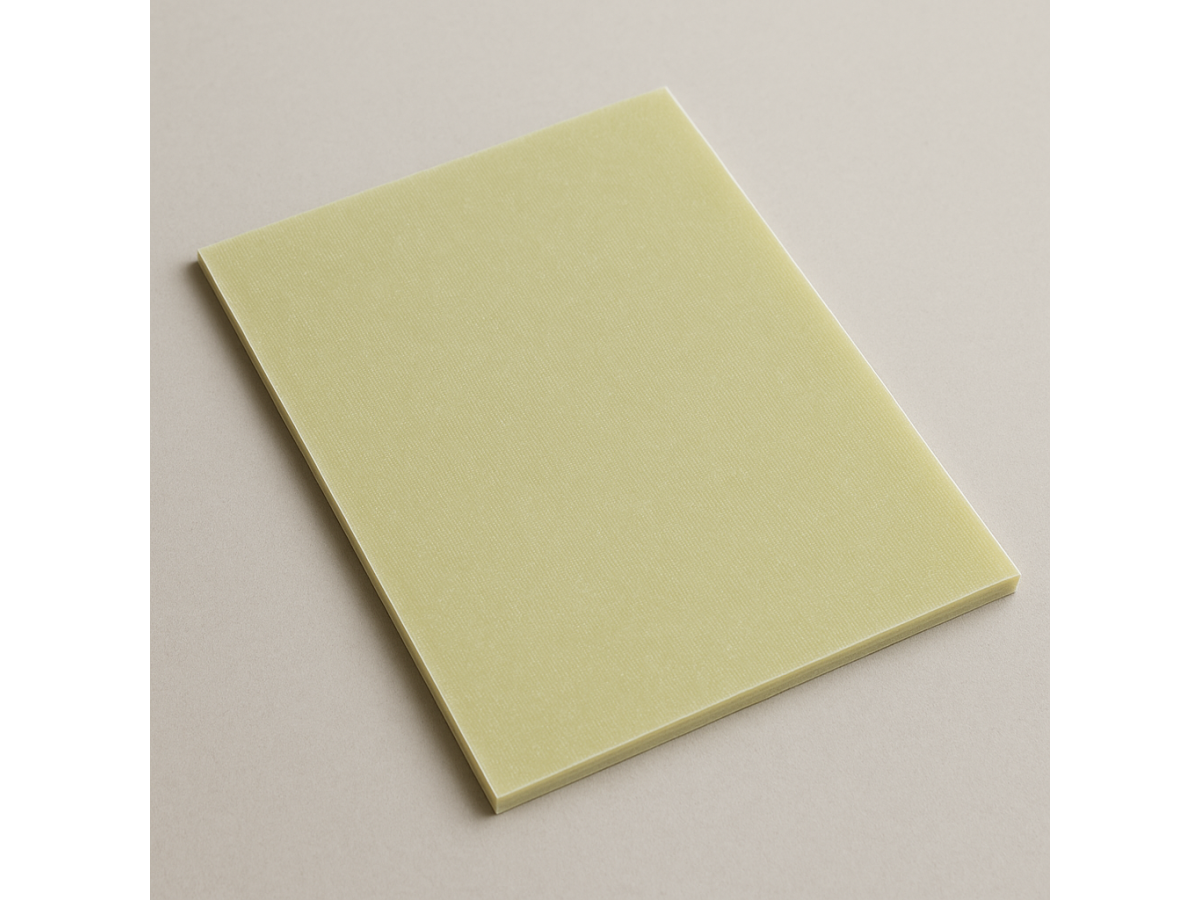
In electrical engineering, along with electric current conductors, dielectrics are widely used to insulate them from each other and the body of the electrical appliance. The more reliable it is, the more stable the operation will be, the longer the service life and the less danger for the user to be exposed to the damaging effects of direct or alternating current. In nature, there were too few materials suitable for such a purpose, so almost all those currently used in practice are of artificial origin and were most often accidentally synthesized in one of the research laboratories engaged in the search for solutions to other industrial problems. One of these substances turned out to be polymerizedepoxyphenol, which, as it turned out after studying, has very good technical parameters for practical application, including the dielectric constant and the range of permissible operating temperatures. By filling a certain volume with it under pressure with an inserted reinforcing frame made of fiberglass, we obtain fiberglass, which has excellent mechanical and insulating properties.
It is used to produce standard products of various shapes and sizes:
- Solid cylindrical rods used to make safe-to-touch handles and moving parts of electrical appliances, in which, when placed in a strong electric field, virtually no electromotive force is induced due to induction.
- Hollow tubes serve as insulators for copper and brass rods, mounting bolts, radio components, and also serve as a basis for winding inductor coils.
- Fasteners, gaskets, and frame parts for winding units are cut out of flat sheets.
It is worth mentioning foil-clad fiberglass separately, which differs from the usual one by the presence of thin copper foil sheets tightly glued to one or both surfaces. After drilling holes in them, applying a pattern with acid-resistant varnish and etching in any composition capable of dissolving copper, boards for printed wiring of individual functional units of radio equipment are obtained. Replacing the wire used in volumetric wiring with flat tracks made of copper foil, along with the achievements of microelectronics, made it possible to reduce the dimensions and energy consumption of household and industrial radio equipment by tens and even hundreds of times, as evidenced by the fact that there is at least one board inside the computer, laptop, tablet or phone with which you are reading this text.
Types of plastics that compete with fiberglass
Without a fiberglass reinforcing frame textolite has electrical and thermal characteristics similar to glass fiber laminate, but is inferior to the latter in tensile strength. Since it has a lower cost due to the simplification of the production technology, it is worth giving preference to it when used without significant mechanical loads. In addition, rods made of it are more suitable for obtaining parts on a lathe, since this produces a smooth, uniform surface without small recesses and protruding pile from the threads included in the internal structure.
In addition to the one created on the basis ofepoxyphenolThere are also other types of glass fiber plastics with good dielectric properties, which are worth discussing separately.
Fluoroplastic
In the middle of the last century, tetrafluoroethylene was accidentally obtained through polymerization. fluoroplastic, which was also used to make printed circuit boards. Due to the presence of such remarkable qualities as exceptional surface slipperiness and destruction when heated without the formation of flame and heat, it has become more widespread not in electrical engineering, but in other areas. The first property brings invaluable benefits in creating friction parts for friction bearings, including shafts, bushings and liners. Together with the second, it allows you to get a non-stick coating for cooking utensils, the main component of which is this substance, which in Western countries is called Teflon.
Plexiglass
Having a name plexiglass Acrylic is also a good dielectric, but due to its high cost it is now rarely used only as an insulator. It has the ability to almost completely transmit optical waves and is not as fragile as ordinary cheap glass, so it is readily used to cover window openings of private and public vehicles. These properties are also useful in the production of lighting fixtures, display cases, aquariums and original decorative items.