


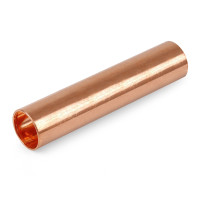
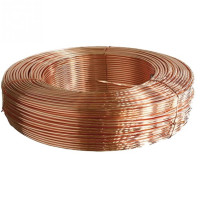
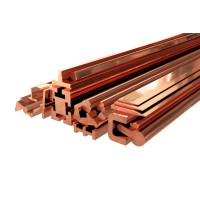
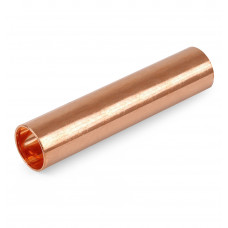

Copper pipes have been an integral part of the construction industry for many decades and are particularly impressive for their stability, durability and longevity. Copper pipes are also characterized by low response to temperature changes. However, copper pipes are not suitable for use as domestic water pipes because they can release metallic particles when flushed and are too expensive for the often long distances. Instead, copper pipes are used for the construction of heating pipes and are available as pure copper pipes or PVC-coated options. The lines are also suitable for the construction of solar systems, extinguishing water pipes and sprinklers, as well as gaseous and liquid fuel distribution systems.
The main advantages of pipes
Probably the biggest advantage of copper cables is their resistance to high temperatures. If pure copper is used when soldering copper pipes, then practically the entire installation does not respond to temperature fluctuations, such as those that occur in heating installations. This allows the movement caused by expansion and contraction to be almost completely minimized without losing the effectiveness of thermal insulation. To further exploit this advantage, copper pipes are calibrated during installation and are precisely “rounded” at the joints.Where are copper pipes used today?
Copper pipe remains one of the most popular materials for piping systems due to its unique combination of strength, durability and corrosion resistance. Today, copper pipes are widely used in various industries and areas, providing reliable and safe transportation of liquids and gases.In the construction of buildings and structures, copper pipes are used in water supply, heating, air conditioning and gas supply systems. Their strength and resistance to various impacts make them an ideal choice for ensuring the reliable functioning of engineering systems.
In the medical industry, copper pipes are used to create medical equipment and medical gas supply systems. Their high biodependency makes them safe for use in medical institutions where sterility and process reliability are important.
Copper pipes are also actively used in industry, including for transporting working fluids, refrigerants, oil and gas. Their ability to withstand high pressures and temperatures makes them popular in the most demanding environments.
Due to its unique properties, copper pipes remain an integral part of modern technologies and are used in various areas of life, ensuring reliability, safety and efficiency in use.
Conclusion
Copper pipes are important in the life of modern society because they are a reliable and durable material for creating pipeline systems. Due to its unique properties, such as high thermal conductivity, corrosion resistance and strength, copper pipes are widely used in various industries and areas. Copper pipes not only have high thermal conductivity and corrosion resistance, but also have excellent formability, making them an ideal material for creating complex pipelines of various configurations. Due to these properties, copper pipes are widely used in heating, air conditioning, water supply, gas supply and other communications systems. It is important to value this material and use it wisely to ensure quality of life and preserve natural resources for future generations!Questions & Answers
Pipes are made from the following grades of copper: M2r, M1r, M3, M2, M1.
European standards:
EN 1412 - Designation system for copper alloys;
EN 13348 - Copper tubes for pressure purposes;
EN 12451 - Copper tubes for heat exchangers;
EN 12449 - Seamless circular tubes for general purposes;
EN 12735-1 - Copper tubes for refrigeration systems;
EN 1057 - Seamless copper tubes for water.
GOST standards:
GOST 32598-2013 - Copper tubes for gas and water;
GOST 21646-2003 - Tubes for heat exchangers;
GOST 495-92 - Circular copper tubes;
GOST 11383-75 - Thin-walled copper tubes;
GOST 617-2006 - General-purpose copper tubes.
| Outside diameter × Wall thickness, mm | Outside diameter × Wall thickness, mm |
|---|---|
| 6 × 1 | 0,14 |
| 8 × 1 | 0,2 |
| 10 × 1 | 0,25 |
| 12 × 1 | 0,31 |
| 15 × 1 | 0,39 |
| 15 × 1.5 | 0,55 |
| 18 × 1 | 0,48 |
| 18 × 1.5 | 0,67 |
| 22 × 1 | 0,59 |
| 22 × 1.5 | 0,82 |
| 28 × 1 | 0,76 |
| 28 × 1,5 | 1,05 |
| 35 × 1.5 | 1,34 |
| 42 × 1.5 | 1,63 |
| 54 × 2 | 2,9 |
| 76 × 2 | 4,12 |
| 89 × 2 | 4,86 |
| 108 × 2.5 | 7,35 |