




Questions & Answers
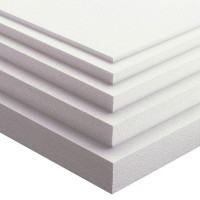
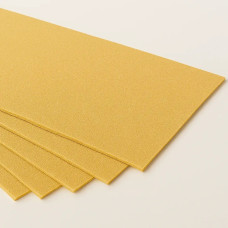
Polyvinyl chloride sheets are made from the following grades: Kömadur, VEKAPLAN, SIMONA, TROVIDUR, PVC-HI, PVC-M, PVC-C, PVC-U, Palight, Forex Classic, Komatex, PVC Foam, Viniplast VE, VD, VN, PVC-EP, PVC-70, PVC-66, PVC-58, and PVC-57.
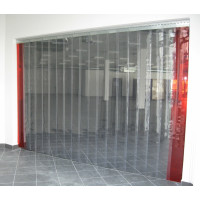
PVC curtains are available in the following varieties: opaque colored, ribbed, welded bronze and red, frost-resistant, antistatic, frost-resistant ribbed, extra frost-resistant, and standard transparent.
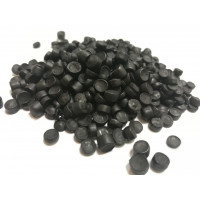
Polyvinyl chloride granules are made from: PVC-E-74, PVC-E-70, PVC-E-67, PVC-E-65, PVC-E-62, PVC-C-72, PVC-C-71, PVC-C-70, PVC-C-68, PVC-C-67, PVC-C-66, PVC-C-65, PVC-C-60, PVC-C-58, PVC-O, PVC-M, PVC-U, K67, SG8, SG5.
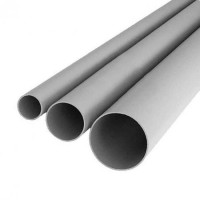
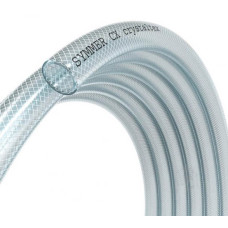
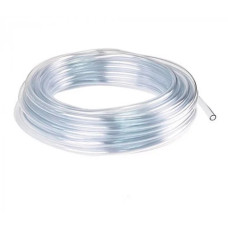
Polyvinyl chloride tubes are made from: K70, K67, K65, K57, S-70, S-65, S-58, PVC-C, PVC-P, PVC-U.
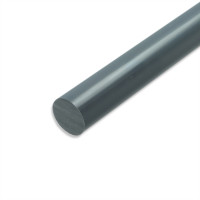
Polyvinyl chloride rods are made from: PVC-BK, PVC-W, PVC-GR, PVC-HT, PVC-C, PVC-M, PVC-I, PVC-U.
Polyvinyl chloride sheet standards:
ISO 7823-1 — dimensions, types, and characteristics of polyvinyl chloride sheets. This standard regulates: heat resistance, impact strength, tensile strength, thickness, color, flatness, appearance, thickness tolerances, and dimensions.
ISO 11833-1 - Unplasticized PVC Sheets. This standard establishes product labeling rules, test methods, electrical properties, thermal properties, mechanical characteristics, dimensions and tolerances, raw material requirements, and sheet classification.
ASTM D1784 - Standard for the Classification of Rigid PVC Compounds. It defines compound requirements prior to processing into finished products, raw material quality control methods, a material designation system, minimum physical and mechanical property requirements, and material classification.
PVC Curtain Standards:
ISO 868 - Plastics and Hard Rubber - Determination of Shore Hardness. This standard specifies a method for measuring the hardness of soft PVC composites used to manufacture strip curtains. It establishes a standard procedure for determining the hardness of plastics and hard rubber by measuring the resistance of a surface to indentation under a specified load.
ISO 527 - Standard Specifying Test Methods for Assessing the Tensile Properties of Plastics. This document defines procedures for measuring the modulus of elasticity, tensile strength, and elongation at break, ensuring comparability of results in research and industry.
ISO 1183-1 is a standard that specifies methods for measuring the density of non-cellular plastics. This document is used to compare different plastics, assess material homogeneity, and control quality. This standard covers methods for determining the density of non-cellular plastics in liquid or solid states. It applies to filled composites, thermoplastics, resins, and thermosetting materials.
Polyvinyl chloride granule standards:
ASTM D1755 – standard for PVC resins used in the production of granules and compounds. This standard establishes requirements for vinyl chloride homopolymers in powder form intended for further processing and mixing into thermoplastic composites. This standard specifies: control of aqueous extract conductivity, bulk density, particle size distribution, viscosity classification, batch quality control, sampling methods, raw material requirements, and the classification of PVC resins by type.
ISO 1060-1 defines a classification and designation system for PVC resins and granules. It takes into account resin structure, processing type, application, and polymerization method. This standard is intended for: standardizing manufacturer designations, classifying by process characteristics, and unifying PVC grades.
ISO 1183 - Determination of the density of plastics. This standard is used to control the density of finished products and PVC granules. Test methods: hydrostatic weighing, pycnometric method, and immersion method. Parameters tested: change in density after processing, specific gravity, and true density.
PVC tubing standards:
GOST 51613 - Specifications for Pressure Pipes Made of Unplasticized Polyvinyl Chloride. This standard covers transportation, storage, appearance requirements, product acceptance, marking, length, dimensional tolerances, mechanical requirements, working pressure classes, and pipe design.
ISO 1452 - Unplasticized Polyvinyl Chloride Piping Systems for Pressure Sewerage and Water Supply. This standard defines quality assessment methods, raw material requirements, operating conditions, general system requirements, material classification, terminology, marking, test methods, appearance requirements, pressure ratings, and intended use.
ISO 15493 - Requirements for plastics piping system components for industrial applications. This standard specifies product labeling, surface requirements, connections, and durability, application areas, test methods, pressure ratings, and dimensional ranges.
PVC rod standards:
GOST 14332-78 - Specifications for polyvinyl chloride suspension. This standard covers packaging, storage, safety requirements, testing methods, acceptance procedures, labeling, and application areas.
ISO 15493 - Methods for Determining the Density of Non-Cellular Plastics. This standard covers: quality control and material density, mass, test conditions, batch stability, PVC-U grade compliance, extrusion quality, presence of voids and pores, and structural homogeneity.
ISO 527 - Determination of Tensile Properties of Plastics. This standard specifies: strain at break, tensile modulus, application range, elongation, yield stress, and tensile strength.
Table of weights of polyvinyl chloride sheets
| Thickness, mm | Weight of 1 m², kg |
| 1 | 1,4 |
| 2 | 2,8 |
| 3 | 4,2 |
| 4 | 5,6 |
| 5 | 7,0 |
| 6 | 8,4 |
| 8 | 11,2 |
| 10 | 14 |
| 12 | 16,8 |
| 15 | 21 |
| 20 | 28 |
| 25 | 35 |
| 30 | 42 |
| 40 | 56 |
| 50 | 70 |
PVC Sheet Size Chart
| Length, mm | Width, mm | Thickness, mm |
| 1000 | 2000 | 1–30 |
| 1220 | 2440 | 1–30 |
| 1300 | 2000 | 2–30 |
| 1500 | 3000 | 2–50 |
| 2000 | 3000 | 3–50 |
| 2050 | 3050 | 3–40 |
Table of physical and mechanical properties of sheet polyvinyl chloride
| Indicator | Meaning |
| Density, g/cm³ | 1,38–1,45 |
| Tensile strength, MPa | 45–60 |
| Modulus of elasticity, MPa | 2500–4000 |
| Impact strength, kJ/m² | 2–15 |
| Shore D hardness | 75–85 |
| Water absorption, % | ≤0,4 |
| Thermal conductivity, Wt/(m·K) | 0,14–0,17 |
| Dielectric strength, kV/mm | 35–45 |
Table of weights of PVC curtains
| Strip width, mm | Thickness, mm | Weight of 1 running meter, kg |
| 100 | 2 | 0,24 |
| 200 | 2 | 0,48 |
| 200 | 3 | 0,72 |
| 300 | 2 | 0,72 |
| 300 | 3 | 1,08 |
| 300 | 4 | 1,44 |
| 400 | 3 | 1,44 |
| 400 | 4 | 1,92 |
| 500 | 3 | 1,8 |
| 500 | 4 | 2,4 |
Table of physical and mechanical properties of polyvinyl chloride curtains
| Indicator | Meaning |
| Density | 1,20–1,30 g/cm³ |
| Hardness | 70–80 Shore A |
| Tensile strength | 15–25 MPa |
| Elongation at break | 250–350 % |
| Light transmittance of transparent strips | To 85 % |
| Water absorption | Less 0,5 % |
| Flammability | Self-extinguishing material |
Table of weights of polyvinyl chloride granules at different bulk densities
| Volume | 0,50 kg/l | 0,60 kg/l | 0,70 kg/l | 0,80 kg/l |
| 10 l | 5 kg | 6 kg | 7 kg | 8 kg |
| 20 l | 10 kg | 12 kg | 14 kg | 16 kg |
| 50 l | 25 kg | 30 kg | 35 kg | 40 kg |
| 100 l | 50 kg | 60 kg | 70 kg | 80 kg |
| 200 l | 100 kg | 120 kg | 140 kg | 160 kg |
| 500 l | 250 kg | 300 kg | 350 kg | 400 kg |
| 1000 l | 500 kg | 600 kg | 700 kg | 800 kg |
Table of the main types of polyvinyl chloride granules
| Granule type | Designation | Peculiarities | Main Application |
| Unplasticized PVC | PVC-U | High rigidity | Pipes, fittings, sheets |
| Plasticized PVC | PVC-P | Flexibility and elasticity | Cable sheaths, hoses |
| Chlorinated PVC | CPVC | Increased heat resistance | Hot water supply |
| Impact-resistant PVC | PVC-HI | Increased impact strength | Profiles, sheets |
| Foamable PVC | PVC-F | Low density | Advertising panels |
PVC tube weight tables
| Outer diameter, mm | Wall thickness, mm | Inner diameter, mm | Weight, kg/m |
| 10 | 1 | 8 | 0,04 |
| 12 | 1 | 10 | 0,048 |
| 16 | 2 | 12 | 0,123 |
| 20 | 2 | 16 | 0,158 |
| 25 | 2 | 21 | 0,202 |
| 25 | 3 | 19 | 0,303 |
| 32 | 2 | 28 | 0,264 |
| 32 | 3 | 26 | 0,382 |
| 40 | 2 | 36 | 0,334 |
| 40 | 3 | 34 | 0,495 |
| 50 | 3 | 44 | 0,713 |
| 50 | 4 | 42 | 0,922 |
| 63 | 3 | 57 | 0,9 |
| 63 | 5 | 53 | 1,445 |
| 75 | 4 | 67 | 1,267 |
| 75 | 5 | 65 | 1,551 |
| 90 | 5 | 80 | 1,869 |
| 110 | 5 | 100 | 2,308 |
| 110 | 8 | 94 | 3,555 |
| 125 | 6 | 113 | 3,166 |
Table of physical and mechanical properties of polyvinyl chloride tubes
| Indicator | Meaning |
| Density | 1,38–1,45 g/cm³ |
| Tensile strength | 45–60 MPa |
| Modulus of elasticity | 2500–3500 MPa |
| Shore hardness D | 75–85 |
| Water absorption | ≤0,4 % |
| Operating temperature | from -15 to +60 °C |
| Vicat softening point | 75–85 °C |
| Dielectric strength | 35–50 kV/mm |
PVC Tube Size Chart
| Outer diameter, mm | Inner diameter, mm | Wall thickness, mm |
| 6 | 4 | 1 |
| 8 | 6 | 1 |
| 10 | 8 | 1 |
| 12 | 10 | 1 |
| 16 | 12 | 2 |
| 20 | 16 | 2 |
| 25 | 21 | 2 |
| 32 | 28 | 2 |
| 40 | 36 | 2 |
| 50 | 46 | 2 |
| 63 | 59 | 2 |
| 75 | 71 | 2 |
Tables of weights of polyvinyl chloride rods
| Diameter, mm | Weight of 1 m, kg |
| 10 | 0,111 |
| 15 | 0,251 |
| 20 | 0,446 |
| 25 | 0,697 |
| 30 | 1,004 |
| 40 | 1,784 |
| 50 | 2,788 |
| 60 | 4,014 |
| 80 | 7,136 |
| 100 | 11,153 |
| 120 | 16,06 |
| 150 | 25,095 |
| 200 | 44,614 |
Table of sizes of polyvinyl chloride rods
| Diameter, mm | Standard length, mm |
| 6 | 1000, 2000 |
| 8 | 1000, 2000 |
| 10 | 1000, 2000 |
| 12 | 1000, 2000 |
| 15 | 1000, 2000 |
| 20 | 1000, 2000 |
| 25 | 1000, 2000 |
| 30 | 1000, 2000 |
| 40 | 1000, 2000 |
| 50 | 1000, 2000 |
| 60 | 1000, 2000 |
| 80 | 1000, 2000 |
| 100 | 1000, 2000 |
| 120 | 1000, 2000 |
| 150 | 1000, 2000 |
| 200 | 1000, 2000 |
Table of physical properties of polyvinyl chloride rods
| Indicator | Meaning |
| Density | 1,38–1,45 g/cm³ |
| Water absorption | ≤ 0,1 % |
| Shore hardness D | 80–85 |
| Tensile strength | 45–60 MPa |
| Modulus of elasticity | 2800–3500 MPa |
| Impact toughness | 5–15 kJ/m² |
| Coefficient of linear expansion | 6–8×10⁻⁵ 1/°C |