


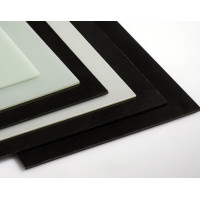
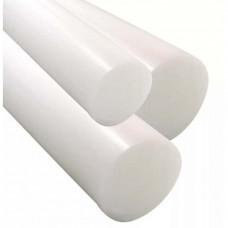
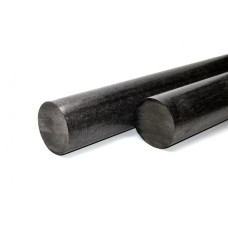
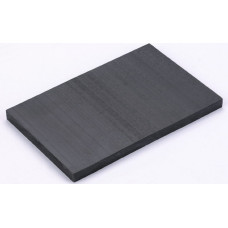
-228x228.jpg "Polyacetal (ROM), white sheet, Zellamid 900 0,5х1000х2000 mm")

Polyacetal: Sheets and Rods in Ukraine
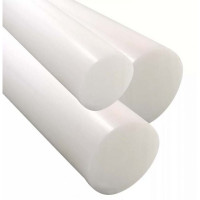
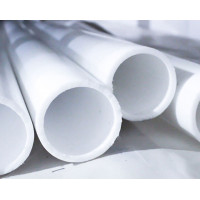
Polyacetal, also known as POM, is a high-strength thermoplastic polymer that finds wide application in various industries. Due to its high strength, rigidity and resistance to chemical influences, polyacetal becomes an ideal material for the production of precise and durable parts. In Ukraine, it is available in the form of sheets and rods that can be used in a wide variety of industrial and technical projects.
Key Product Features
Polyacetal has several important features that make it a popular choice for many engineering applications:
- Good compressive and tensile strength. The material has excellent mechanical properties, so it is ideal for use in high-load conditions.
- Heat resistance. This material retains its qualities in a wide range of temperatures, from -40 ° C to + 100 ° C, which makes it suitable for use in extreme conditions.
- Low coefficient of friction. Polyacetal has excellent sliding properties, which in turn minimizes friction and wear, especially in bearings and gears.
- Chemical resistance. The material is resistant to most chemicals, including oils, solvents and acids, so it is durable and reliable.
Polyacetal is easy to machine, thanks to which it can be used to create parts with increased precision and complex geometry.
Where can it be used?
Polyacetal is widely used in various fields due to its excellent characteristics. Here are the main areas of application:
- Mechanical engineering. Manufacturing of parts, such as gears, bearings, bushings and various mechanical elements that require high strength and precision.
- Automotive industry. Manufacturing of transmission elements, parts of internal systems and other components that must withstand heavy loads and temperatures.
- Electronics. Creation of housings for electronic devices, connectors, buttons and other elements where precision and durability are important.
Industrial automation cannot do without this material. Here, it is used to manufacture components for robots and automatic systems, such as drive parts and mechanisms.
Advantages
Polyacetal is characterized by high strength and wear resistance, which guarantee a long service life of products. Preservation of mechanical properties when changing temperature makes the material suitable for use in various climatic conditions. The material is not subject to corrosion and destruction when in contact with chemicals, which increases its performance characteristics several times. Both sheet and rod polyacetal are easy to process, which allows you to produce parts of any shape and complexity.
Buy a product in Ukraine
If you are looking for reliable polyacetal for your needs, our store offers sheet and rod polyacetal of the highest quality. We provide:
- Variety of formats - we have polyacetal in different formats and sizes, which will suit any project.
- Competitive prices - we offer favorable prices for the entire range of products.
- Fast delivery - prompt shipment of orders throughout Ukraine for your convenience.
Contact us for advice and to place an order. We will help you choose the perfect product for your project and guarantee high quality and reliability.
Questions & Answers
Polyacetal rods are made from: POM-C, POM-H, POM-C PTFE, POM + PE, POM + Silicone, POM: CF, GF25, GF20, GF10. POM: SD, ESD, Ultrafirm FG, Delrin FG, POM-C FG.
Polyacetal sheets are made from: Sustarin C, TECAFORM AD, Kepital F30-03, F20-03, Ultraform W2320, N2320, Hostaform: MT24U01, C13031, C9021, Sustarin H, TECAFORM AH, Delrin: AF Blend, 900P, 500P, 100P.
Polyacetal tubes are made from: TECAFORM AH, Ultraform, POM-H, Kepital, POM-C, Hostaform, Delrin.
The main international standards for polyacetal rods are:
ISO 10350-1 - Material Property Data Sheet. This standard specifies mechanical and physical properties, units of measurement, thermal and electrical characteristics, and test methods.
ISO 29988-2 - Methods for preparing polyoxymethylene test specimens. This standard defines the preparation and conditioning conditions of test specimens, shrinkage, heat resistance, impact strength, reproducibility requirements, tensile strength, elastic modulus, test methods, and elongation at break.
ISO 29988-1 - Framework and designation system for polyoxymethylene specifications for injection molding and extrusion. This standard regulates the material designation system, scope of application, main classification parameters, and material properties.
Polyacetal sheet standards:
ISO 29988-1 - Framework and designation system for polyoxymethylene specifications for extrusion and injection molding. This standard defines the scope of application, material properties, key classification parameters, and material designation system.
ISO 29988-2 - Methods for sample preparation and testing of polyoxymethylene. This standard specifies shrinkage, heat resistance, impact strength, elastic modulus, elongation at break, tensile strength, reproducibility requirements, test methods, conditioning conditions, and test specimen preparation.
ISO 10350-1 - Material property data sheet. This standard contains units of measurement, test methods, thermal and electrical characteristics, mechanical and physical properties.
Polyacetal tubing standards:
ISO 9988 - Polyoxymethylene for extrusion and injection molding. This standard specifies requirements for physical and mechanical properties, grade designation methods, POM classification, material quality control system, test methods, physical and mechanical property requirements, labeling, quality control, service temperature conditions, and the scope of use.
ASTM D6778 is a specification and classification system for polyoxymethylene molding and extrusion materials. This standard covers technical requirements, designations, classification, scope of use, materials covered by the standard, material quality requirements, test methods, and thermal, mechanical, and physical properties.
Polyacetal rod weight chart
| Diameter, mm | Weight, kg/m |
| 6 | 0,04 |
| 8 | 0,07 |
| 10 | 0,11 |
| 12 | 0,16 |
| 14 | 0,22 |
| 16 | 0,28 |
| 18 | 0,36 |
| 20 | 0,44 |
| 22 | 0,53 |
| 25 | 0,69 |
| 30 | 1,0 |
| 35 | 1,35 |
| 40 | 1,78 |
| 45 | 2,25 |
| 50 | 2,77 |
| 60 | 3,98 |
| 70 | 5,42 |
| 80 | 7,1 |
| 90 | 9,0 |
| 100 | 11,1 |
| 120 | 15,95 |
| 150 | 25 |
| 200 | 44,4 |
Table of mechanical properties of polyacetal rods
| Indicator | POM-C | POM-H |
| Tensile strength, MPa | 65–70 | 70–78 |
| Modulus of elasticity, MPa | 2800 | 3200 |
| Impact strength, kJ/m² | 7 | 8 |
| Elongation at break, % | 20–40 | 15–30 |
| Compressive strength, MPa | 90 | 100 |
Table of physical properties of polyacetal rods
| Indicator | POM-C | POM-H | Unit |
| Density | 1,41 | 1,42 | g/cm³ |
| Water absorption (24 h) | 0,2 | 0,2 | % |
| Hardness | 80 | 82 | Shore D |
| Operating temperature | -40...+100 | -40...+100 | °C |
| Melting point | 165 | 175 | °C |
Polyacetal sheet weight table
For sheets 1000 × 2000 mm.
| Thickness, mm | Sheet weight, kg |
| 2 | 5,68 |
| 3 | 8,52 |
| 5 | 14,2 |
| 10 | 28,4 |
| 15 | 42,6 |
| 20 | 56,8 |
| 25 | 71 |
| 30 | 85,2 |
| 40 | 113,6 |
| 50 | 142 |
| 60 | 170,4 |
| 80 | 227,2 |
| 100 | 284 |
Polyacetal sheet size chart
| Sheet format, mm | Typical thicknesses, mm |
| 500 × 1000 | 1–50 |
| 620 × 1000 | 6–100 |
| 1000 × 1000 | 2–100 |
| 1000 × 2000 | 2–100 |
| 1220 × 2440 | 2–50 |
| 1500 × 3000 | 10–100 |
| 2000 × 3000 | 20–100 |
Table of physical properties of polyacetal sheets
| Parameter | Meaning |
| Density, g/cm³ | 1,39–1,43 |
| Water absorption, % | 0,2–0,8 |
| Shore D hardness | 80–86 |
| Tensile strength, MPa | 60–75 |
| Modulus of elasticity, MPa | 2500–3200 |
| Friction coefficient | 0,20–0,35 |
| Melting point, °C | 165–175 |
| Operating temperature, °C | −40...+100 |
| Short-term temperature, °C | до +140 |
Polyacetal tube weight chart
| Size, mm | Weight of 1 m, kg |
| 10×6 | 0,071 |
| 12×8 | 0,089 |
| 16×10 | 0,185 |
| 20×12 | 0,356 |
| 25×15 | 0,57 |
| 30×20 | 0,781 |
| 40×25 | 1,449 |
| 50×30 | 2,232 |
| 60×40 | 2,678 |
| 80×60 | 3,12 |
| 100×80 | 4,018 |
Table of physical properties of polyacetal tubes
| Indicator | POM-C | POM-H |
| Density, g/cm³ | 1,41 | 1,42 |
| Water absorption, % | 0,2 | 0,25 |
| Melting point, °С | 165 | 175 |
| Friction coefficient | 0,2–0,35 | 0,2–0,3 |
| Thermal conductivity, Wt/(m·К) | 0,31 | 0,35 |
Table of mechanical properties of polyacetal tubes
| Indicator | POM-C | POM-H |
| Tensile strength, MPa | 60–70 | 70–80 |
| Modulus of elasticity, MPa | 2600–2900 | 3000–3400 |
| Hardness Shore D | 80–85 | 85–90 |
| Impact strength, kJ/m² | 7–10 | 6–8 |
| Elongation at break, % | 20–40 | 15–25 |