


-228x228.jpg "Polypropylene honeycomb sheet, Triaprint, white, 2,7x1500x2050 mm")

Questions & Answers
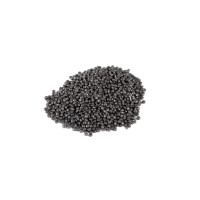
Polypropylene granules are made from: PP + CaCO₃, PP GF, HMW-PP, PP-R, PP-B, PP-H, PP Random Copolymer, PP Pipe Grade, PP Film Grade, PP Fiber Grade, PP Blow Molding, PP Extrusion, PP Injection.
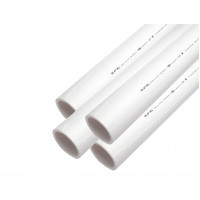
Polypropylene tubes are made from: PP-S, PP-HM, PP-B100, PP-H100, PPR-CT, PPR-C, PP-RCT Type 2, PP-R 100, PP-R 80, PP-RCT, PP-R, PP-B, PP-H.
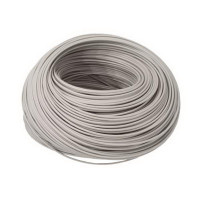
Polypropylene welding rods are made from: PP-GF30, PP-GF20, PP-GF10, PP-UV, PP-EL, PP-FR, PP-DWU, PP-C, PP-RCT, PP-R, PP-B, PP-H.
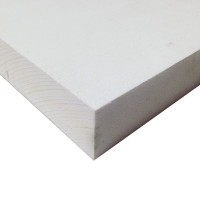
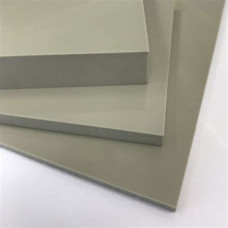
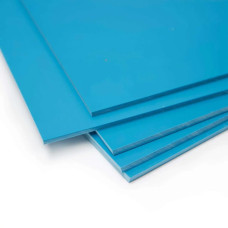
Polypropylene sheets are made from: PP-UV, PP-FR, PP-C, PP-R, PP-B, PP-H.
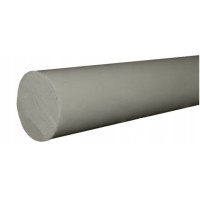
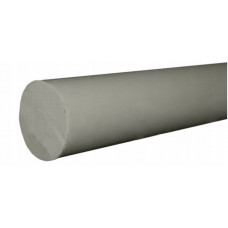
Polypropylene rods are made from: PP + GF, PP-C, PPH 3120, PPH 100, PP-R, PP-B, PP-H.
Polypropylene Granule Standards:
ISO 1873-1 is a standard establishing a designation system for polypropylene extrusion and injection molding materials. It describes how to label and classify polypropylene pellets by their main modifications, properties, fillers, and intended use.
ISO 1133 is a standard for determining the melt flow rate of thermoplastic materials. It is used to control the quality of polymer granules, including polystyrene, polyethylene, polypropylene, ABS, and other thermoplastics. The standard defines two parameters: volumetric and mass flow rate of the melt.
ISO 527 is a standard that specifies a tensile test method for plastics. It is used to determine the deformation, strength, and elastic properties of polymers, including polypropylene, ABS, polyamides, polyethylene, PEEK, and other thermoplastics. The standard is used to assess the quality of profiles, pipes, polymer granules, and sheets.
Polypropylene tube standards:
ISO 15874 — Polypropylene Piping Systems for Cold and Hot Water Supply. It regulates polypropylene fittings and pipes for domestic systems, heating systems, hot water supply systems, and potable water systems.
ISO 15494 — Industrial Plastics Piping Systems. It establishes requirements for plastic piping systems for industrial use. This standard covers durability requirements, marking, pressure, dimensions, appearance, temperature requirements, application areas, and pipe connection methods.
DIN 8077 is a standard that establishes requirements for the dimensions, tolerances, and weights of polypropylene pipes. This standard applies to polypropylene pipes and is one of the fundamental documents for the production and design of polypropylene pipelines. It defines product markings, pipe weights, design dimensions, dimensional tolerances, wall thicknesses, and pipe outside diameters.
Polypropylene welding rod standards:
DVS 2207-11 - Hot-Tool Welding of Thermoplastics for Polypropylene Pipes, Pipe Fittings, and Sheets. This technical directive establishes requirements for hot-tool welding of polypropylene products. This standard covers: quality control of welded joints, areas of application, environmental requirements, butt welding parameters, heating element temperature, and pre-welding requirements.
DVS 2203-2 is a directive establishing a tensile testing method for welded joints in thermoplastics. This standard is used to assess the quality of welded joints in sheets, fittings, and pipes made of thermoplastic materials. It defines the short-term weld coefficient, the failure mode, the location of specimen failure, the strength of the weld, and the quality of the weld.
ISO 1873-1 is a standard establishing a classification and designation system for polypropylene materials intended for injection molding and extrusion. This standard serves as the basis for material data sheets, technical specifications, and raw material selection for the manufacture of polypropylene products. This standard allows for the standardization of material data sheets, the development of raw material specifications, the selection of materials for specific operating conditions, the comparison of materials from different manufacturers, and the classification of polypropylene grades.
Polypropylene sheet standards:
ISO 1873-1 - Designation and classification of polypropylene. This standard defines the main performance characteristics, modifiers, fillers, material structure, and polymer type. It regulates additives, melt flow index, density, processing method, and material type.
ISO 527 - Tensile testing of plastics. This standard defines the mechanical properties of polypropylene sheets. The defined characteristics include yield stress, elongation, modulus of elasticity, and tensile strength. It is used for load calculations, selection of structural thickness, and sheet quality control.
ISO 178 — bending test. Determines the sheet's ability to resist bending. This standard is used to monitor flexural strength, flexural modulus, deformation resistance, and material rigidity. For polypropylene sheets used in chemical baths, tanks, ventilation, and welded structures, this standard is a key quality indicator.
Polypropylene rod standards:
ISO 527 is a standard that defines the method for determining the tensile mechanical properties of plastics. For polypropylene sheets, rods, pipes, and other products, this standard is used to evaluate the stiffness, strength, and deformability of the material. It defines measurement methods for stress at a given elongation, yield strength, elongation at break, tensile modulus, and ultimate tensile strength.
ISO 178 - standard specifies a method for determining the mechanical properties of plastics under three-point bending. For polypropylene rods, structural components, plates, and sheets, it is used to evaluate stiffness, deformation resistance, and strength. The standard specifies the flexural modulus, deformation, stress, and flexural strength.
ISO 1133 - determination of the melt flow index of plastics. It indicates how easily molten plastic flows at a given temperature and load. For polypropylene rods, this index allows for the evaluation of batch-to-batch variations, melt flowability, production stability, and material suitability for extrusion.
Polypropylene granule weight chart
| Granule volume | Weight PP |
| 1 cm³ | 0,90–0,91 g |
| 100 cm³ | 90–91 g |
| 0,5 liters | 450–455 g |
| 1 liter | 895–910 g |
| 5 liters | 4,5–4,55 kg |
| 10 liters | 8,95–9,10 kg |
| 50 liters | 44,8–45,5 kg |
| 100 liters | 89,5–91 kg |
Table of types of polypropylene granules
| Type of polypropylene | Designation | Basic properties | Typical Applications |
| Homopolymer | PP-H | High rigidity, good strength, high operating temperature | Pipes, sheets, containers, machine parts |
| Block copolymer | PP-B | Increased impact strength, frost resistance | Automotive parts, housings, pipes |
| Random copolymer | PP-R | Good transparency, chemical resistance, stability | Water pipes, fittings |
| High molecular weight PP | HMW-PP | High wear resistance | Technical products |
| Reinforced PP | PP GF | Increased rigidity | Automotive components, engineering parts |
| Filled PP | PP + CaCO₃ / talc | Improved rigidity, reduced cost | Cases, panels, packaging |
Table of polypropylene tube weights
| Diameter × wall, mm | Weight of 1 m, kg |
| 16×2,0 | 0,1 |
| 20×2,0 | 0,12 |
| 20×3,4 | 0,18 |
| 25×2,3 | 0,16 |
| 25×4,2 | 0,29 |
| 32×3,0 | 0,25 |
| 32×5,4 | 0,45 |
| 40×3,7 | 0,42 |
| 50×4,6 | 0,65 |
| 63×5,8 | 0,95 |
| 75×6,8 | 1,35 |
| 90×8,2 | 1,95 |
| 110×10 | 2,7 |
Table of characteristics of polypropylene tubes
| Parameter | Meaning |
| Материал | Polypropylene (PP) |
| Main types | PP-H, PP-B, PP-R, PP-RCT |
| Density | 0,89–0,91 g/cm³ |
| Operating temperature | from -10 до +95 °C |
| Melting point | 160–170 °C |
| Water absorption | ≤0,1 % |
| Chemical resistance | High |
| Electrical insulating properties | Excellent |
| Corrosion resistance | Not subject to corrosion |
| Color | White, gray, green, black |
| Connection method | Welding, socket welding, fittings |
| Application | Water, heating, chemical environments, industry |
Polypropylene welding rod weight tables
| Rod diameter, mm | Weight of 1 m, g | Weight 10 m, g | Weight 50 m, kg | Weight 100 m, kg |
| 3 | 6,4 | 0,064 | 0,32 | 0,64 |
| 4 | 11,4 | 0,114 | 0,57 | 1,14 |
| 5 | 17,9 | 0,179 | 0,895 | 1,79 |
| 6 | 25,7 | 0,257 | 1,285 | 2,57 |
| 7 | 35 | 0,35 | 1,75 | 3,5 |
| 8 | 45,7 | 0,457 | 2,285 | 4,57 |
| 10 | 71,5 | 0,715 | 3,575 | 7,15 |
Tables of types of polypropylene welding rods
| Material type | Designation | Density, g/cm³ | Welding temperature, °C | Main Application |
| Homopolymer of polypropylene | PP-H | 0,90–0,91 | 260–320 | Chemical containers, apparatus |
| Polypropylene block copolymer | PP-B | 0,90–0,91 | 250–310 | Pipelines, fittings |
| Random copolymer of polypropylene | PP-R | 0,90–0,91 | 250–300 | Pressure pipes |
| Flame resistant polypropylene | PP-FR | 0,92–1,05 | 260–320 | Ventilation, electrical equipment |
| Electrically conductive polypropylene | PP-EL | 0,95–1,15 | 260–320 | Antistatic designs |
Polypropylene sheet weight chart
For sheets 1000×2000 mm
| Thickness, mm | Weight, kg |
| 1 | 1,82 |
| 2 | 3,64 |
| 3 | 5,46 |
| 4 | 7,28 |
| 5 | 9,1 |
| 6 | 10,92 |
| 8 | 14,56 |
| 10 | 18,2 |
| 12 | 21,84 |
| 15 | 27,3 |
| 20 | 36,4 |
| 25 | 45,5 |
| 30 | 54,6 |
| 35 | 63,7 |
| 40 | 72,8 |
| 45 | 81,9 |
| 50 | 91 |
Polypropylene sheet size chart
| Sheet format, mm | Area, m² | Application |
| 1000×2000 | 2,0 | Small parts, containers, lining |
| 1220×2440 | 2,98 | Universal format |
| 1500×3000 | 4,5 | Large parts, tanks |
| 2000×4000 | 8,0 | Industrial structures |
Table of physical properties of polypropylene sheets
| Parameter | Meaning |
| Density | 0,90–0,91 g/cm³ |
| Water absorption | <0,05 % |
| Melting point | 160–170 °C |
| Operating temperature | −10…+100 °C |
| Thermal expansion coefficient | 1,5×10⁻⁴ 1/К |
| Thermal conductivity | 0,22 Vt/(m·К) |
| Dielectric strength | 30–40 kV/mm |
| Flammability | HB (UL94) |
Polypropylene rod weight chart
| Diameter, mm | Weight of 1 m, kg |
| 5 | 0,018 |
| 6 | 0,026 |
| 8 | 0,046 |
| 10 | 0,071 |
| 12 | 0,103 |
| 15 | 0,161 |
| 20 | 0,286 |
| 25 | 0,446 |
| 30 | 0,643 |
| 35 | 0,875 |
| 40 | 1,145 |
| 50 | 1,786 |
| 60 | 2,572 |
| 70 | 3,5 |
| 80 | 4,58 |
| 90 | 5,72 |
| 100 | 7,15 |
| 120 | 10,3 |
| 150 | 16,05 |
Table of physical and mechanical properties of polypropylene rods
| Parameter | Meaning |
| Density | 0,90–0,91 g/cm³ |
| Tensile strength | 25–35 MPa |
| Modulus of elasticity | 1000–1600 MPa |
| Elongation at break | 200–600 % |
| Impact strength | high |
| Operating temperature | -20…+100 °C |
| Melting point | 160–170 °C |
| Water absorption | ≤0,1 % |
| Shore D hardness | 60–75 |