





Questions & Answers
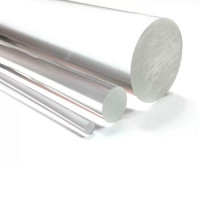
Polycarbonate rods are made from: Iupilon S2000R, Panlite L-1225Y, Calibre, Lexan: 144R, 143R, Makrolon: 2805, 2405.
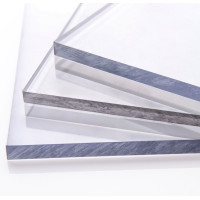
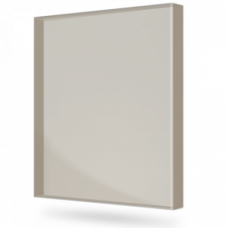
Polycarbonate sheets are made from: Arla, Gallina, Marlon, Palram, Polygal, Makrolon, Lexan.
Polycarbonate rod standards:
ISO 7391-1 - Polycarbonate for injection molding and extrusion. This standard defines: material identification methods, key physical and mechanical properties, requirements for injection molding and extrusion granules, a material designation system, and the classification of polycarbonates. The main controlled parameters are: Vicat softening point, impact strength, elastic modulus, tensile strength, melt flow index, and density.
ISO 527 is a standard defining tensile testing methods for plastics. It establishes procedures for measuring mechanical properties such as strength, elongation at break, and modulus of elasticity. This standard helps determine the suitability of a material for structural components, deformation behavior, load resistance, and component strength.
ISO 178 is a standard establishing a test method for determining the flexural properties of plastics. It describes a three-point bending procedure for obtaining values for the flexural modulus, strain, and stress, widely used to evaluate the strength and stiffness of materials. It is used to evaluate deformation resistance, bending ability, and rod stiffness.
Polycarbonate sheet standards:
ISO 527 - Determination of tensile properties. This standard establishes a methodology for determining the mechanical properties of polycarbonate under tensile stress. The parameters measured include: modulus of elasticity, elongation at yield, elongation at break, yield strength, and tensile strength. It is used to evaluate extrusion quality, product durability, load resistance, and sheet strength.
ISO 178 is a standard that defines a three-point bend test method for plastic materials to determine their ability to resist deformation and failure under load. It is used to evaluate suitability for structural applications, raw material and manufacturing quality, shape retention, material rigidity, and sheet strength under bending loads.
ISO 2859 - Statistical quality control of products using attributes. This standard establishes the rules for acceptance inspection of product batches using random sampling. It defines the level of quality control, when a batch is accepted or rejected, the number of defects allowed, and how many sheets per batch are inspected.
Polycarbonate rod weight chart
| Diameter, mm | Weight of 1 m, kg |
| 10 | 0,094 |
| 20 | 0,377 |
| 30 | 0,848 |
| 40 | 1,508 |
| 50 | 2,356 |
| 60 | 3,393 |
| 80 | 6,032 |
| 100 | 9,425 |
| 120 | 13,572 |
| 150 | 21,206 |
Table of physical properties of polycarbonate rods
| Indicator | Meaning |
| Density, g/cm³ | 1,2 |
| Water absorption (24 h), % | 0,15–0,35 |
| Rockwell hardness | M70–M75 |
| Coefficient of linear expansion, 10⁻⁵/K | 6,5–7,0 |
| Thermal conductivity, Wt/(m·K) | 0,2 |
| Dielectric strength, kV/mm | 15–20 |
Polycarbonate sheet weight chart
| Thickness, mm | Weight of 1 m², kg |
| 1 | 1,2 |
| 2 | 2,4 |
| 3 | 3,6 |
| 4 | 4,8 |
| 5 | 6,0 |
| 6 | 7,2 |
| 8 | 9,6 |
| 10 | 12 |
| 12 | 14,4 |
| 15 | 18 |
| 20 | 24 |
Polycarbonate sheet size chart
| Thickness, mm | Width, mm | Length, mm | Sheet type |
| 1 | 1250 | 2050 | Monolithic |
| 2 | 1250 | 2050 | Monolithic |
| 3 | 1250 | 2050 | Monolithic |
| 4 | 2050 | 3050 | Monolithic |
| 5 | 2050 | 3050 | Monolithic |
| 6 | 2050 | 3050 | Monolithic |
| 8 | 2050 | 3050 | Monolithic |
| 10 | 2050 | 3050 | Monolithic |
| 16 | 2100 | 6000 | Cellular |
| 20 | 2100 | 6000 | Cellular |
Table of mechanical properties of polycarbonate sheets
| Indicator | Meaning |
| Density | 1,20 g/cm³ |
| Tensile strength | 60–70 MPa |
| Modulus of elasticity | 2200–2400 MPa |
| Relative elongation | 80–120 % |
| Bending strength | 90–100 MPa |
| Flexural modulus | 2200–2500 MPa |
| Impact toughness Izod | Without destruction |
| Hardness Rockwell | M70–M75 |