Return guaranteeFree exchange/return of goods within - 1 day
Official warranty from the manufacturer - 12 monthsPaymentCash, Visa/MasterCard, payment via Privat24, non-cash settlement
Acrylic is a hard, transparent, thermoplastic material. The most popular of plastics!
Acrylic rods and pipes have the same properties as sheets.
Acrylic is easy to process - cutting, drilling, gluing, it can be bent and shaped, polished and milled, painted and engraved. It is twice as light as ordinary glass and has eleven times the impact strength.
Acrylic is a colloquial name for polymers based on acrylic and methacrylic acids. This word may mean synthetic fiber, paint based on an acrylic polymer dispersion, structural (including transparent) plastic, etc. The material called “plexiglass” in Russian is sometimes also called “acrylic” at the household level "(due to adoption from the English language, where it is called acrylic or acrylic glass (English acrylic, acrylic glass)). But most often this name refers to a synthetic fiber.
2. Excellent processing, cutting, drilling, bending and other material processing freedom can also be associated with adhesives.
3. High weather resistance shows excellent weather resistance to weather conditions such as sunlight, wind, rain and snow, and is suitable for signage and building materials. No problem, even when used outdoors. PMMA is also used for automotive lightweight lenses and illuminated sign coatings.
4. It is a material with very low degradation in clarity and strength. It depends on the conditions, but it has a durability of 10 to 20 years. Some colored acrylics are fading.
5. It is not easy to break, has excellent security, and is excellent
6. Steady resistance, even if it is broken, it will not scatter large pieces like glass. Impact resistance is 10-16 times higher than Glass1.
Like acrylic resins, it is a clear resin and polycarbonate is used when impact resistance is required.
PMMA has the advantages of light weight, low price and light shape. Dissolved in organic solvents such as anisole, it can form a good film and good dielectric properties, and can be used as a dielectric layer for organic flight effect pipes.
It can be featured by casting, underarm casting, machining, thermoforming, etc. In particular, injection molding can be produced in large quantities with simple processes and low cost. Therefore, it is more and more widely used, it is widely used in instrument parts, car lights, optical lenses, transparent pipes.
Plexiglas acrylic (acrylic) In the construction industry. In building applications in the building, plexiglass acrylic (acrylic) is mainly used in the building body, transparent roof, shed roof, telephone booths, stairs and room wall guards and other aspects; Sanitary Bathware, Washbasin, Vanity and other products. Applications in highway and high-end road lighting and automotive lamps are also developing quite rapidly. Among them, the market for architectural lighting bodies, bathtubs, outdoor advertising light boxes and telephone booths is growing faster, and there will be more development opportunities in the future with a very broad market outlook.
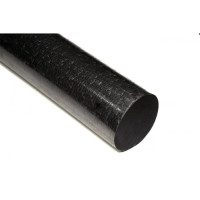
You can buy an Acrylic (plexiglass) rod from us (d 3-100 mm) dl. 2 meters at the best price in Ukraine. A wide range of products allows us to quickly and efficiently fulfill any order, helping to complete any construction work on time.
The main thing
Diameter
2-80 1-30 3-60 3-200 3-100 2-40 6-50 5-1000 mm
View by manufacturing method
Plexiglas is produced in two ways: extrusion and casting. Therefore, there are two types of plexiglass - extruded and cast. The production method itself imposes a number of restrictions and determines some of the properties of the plastic. Extruded plexiglass (English exstrusion, German Extrudiert) is produced by the method of continuous extrusion (extrusion) of a molten mass of granular PMMA through a slotted head, followed by cooling and cutting to specified sizes. Block (English cast, in Russian the terms “cast”, “cast”) are also obtained by pouring a monomer - methyl methacrylate between two flat sheets of inorganic glass and its further polymerization.
Chemical composition
Organic glass is a polymer of methyl methacrylate, an ester of methacrylic acid and methanol, polymerized to open the double bond between the carbon atoms. The chemical structure of standard polymethylmethacrylic glass is the same for all manufacturers.
Type by purpose
Used in instrument parts, car lights, optical lenses, transparent pipes. Acrylic plexiglass is used in the construction industry. In construction, acrylic is mainly used in building body, transparent roof, telephone booths, stairs and room wall guards. It is used to make sanitary utensils in the bath and other products. Suitable for high-quality road lighting and automotive lamps. Used in the market for architectural lighting bodies, bathtubs, outdoor advertising light boxes
A type
Plexiglas (acrylic) rod
Additional services
Cutting is carried out according to the client's order and packaging of products according to the client's orderSent by any carriers in Ukraine
The country of manufacture
Ukraine
No questions about this product, be the first and ask your question.
ASTM D4802 - Specification for Polymethyl Methacrylate and Acrylic Plastic Rods and Tubes. This standard specifies surface quality, diameter tolerances, heat resistance, tensile strength, surface and material classification, physical and mechanical properties, weather resistance, and rod appearance requirements.
DIN 16857 is a German standard for acrylic glass products used for acrylic rods, tubes, and sheets. It regulates marking rules, test methods, mechanical properties, transparency, surface quality, ovality, straightness, dimensions, and tolerances for rods.
ISO 7823 is an international standard defining requirements for polymethyl methacrylate and acrylic glass products. It covers test methods, material types, dimensions, quality control procedures, water absorption, physical and mechanical properties, tolerances, and rod surface requirements.
Acrylic rod weight chart
Diameter, mm
Weight of 1 m, kg
5
0,023
10
0,093
15
0,21
20
0,374
25
0,584
30
0,841
40
1,495
50
2,337
60
3,365
75
5,258
100
9,346
150
21,028
200
37,384
Table of physical and mechanical properties of acrylic rods


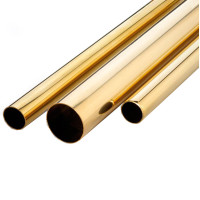
sterzhen-700x700.jpg "Acrylic (plexiglass) rod (d 3-100 mm) dl. 2 meters")