
The need for elastic materials has been a long-standing one among humans, but for a long time, we had to make do with those provided by nature itself, such as rubber, whose products were not particularly durable.
After the development of vulcanization technologies for raw materials pre-filled with various additives, it became possible to produce a vast array of rubber grades that offered significantly greater wear resistance and a host of other useful qualities, but even these did not fully satisfy all existing needs. For this reason, the search for more suitable materials for solving many problems continued, and as a result of painstaking research, chemists synthesized substances fundamentally different from traditional ones, which immediately found application in several areas of human activity. This is particularly true for polymeric substances with a unique set of properties, obtained from certain organosilicon molecules, which are now used in large quantities to produce a variety of products silicone products.
First of all, it was discovered that they can operate effectively over a much wider temperature range, significantly expanding in both directions. They do not dry out or ignite when heated intensely, and when cooled deeply, they do not become excessively brittle and disintegrate under mechanical stress. As a result, they have become widely used, even as door seals in household appliances:
refrigerators and freezers;
horizontal washing machines;
ovens for baking dough.
They are also found in some models of wardrobes with sliding doors as shock-absorbing safety elements that do not stain clothing that comes into contact with them.
Types of silicone products for various applications
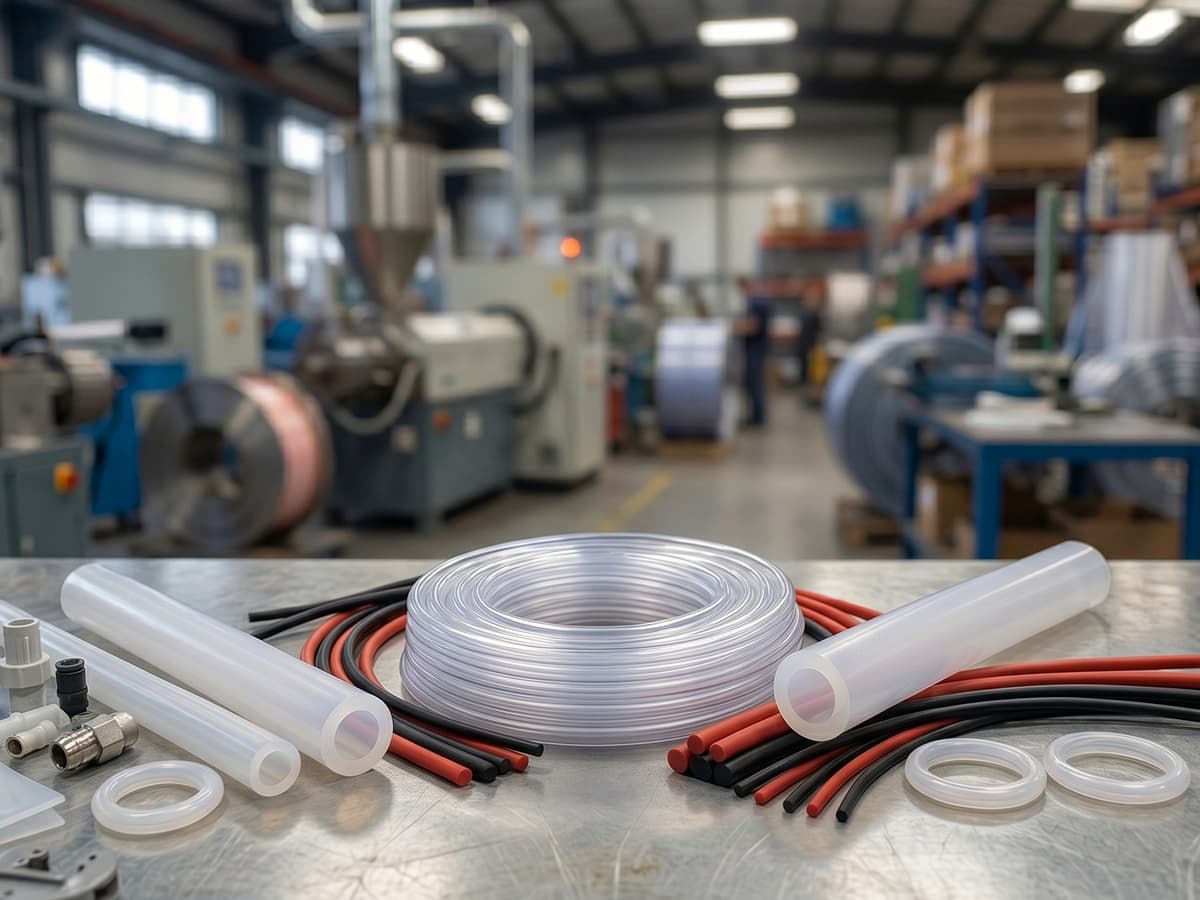
Silicone products come to market in a variety of geometric shapes, sometimes quite unusual, sizes, and raw material compositions. It's worth examining individual types in more detail, in conjunction with their primary applications.
Silicone sheet
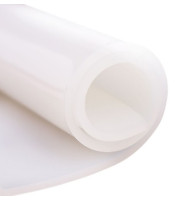
Thin silicone sheet It is primarily valued for its extremely low adhesion, which is why it is often used to protect the interior surfaces of food-processing tanks. Sticky, sweet, and fatty substances practically do not adhere to it, and if any residue remains on the walls after the process is complete, it is easily washed away with a regular stream of water without the need for any detergents. This feature significantly simplifies equipment maintenance, not to mention increasing the waste-free nature of food production itself.
Silicone tube
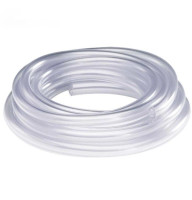
Elastic silicone tube It demonstrates its superior qualities in many areas, but its advantages are most evident in medicine. Many diagnostic and procedural equipment utilize short-distance transport systems for the circulation of biological fluids, saline solutions, and medications. The condition of patients, especially those in the acute phase, directly depends on their timely delivery to the right place in precisely defined doses. Therefore, the visually controlled passage of each dose through transparent walls facilitates the work of medical personnel. Another key feature of these devices is the absolute absence of toxic emissions and oxidation-reduction reactions with the vast majority of substances, which is one of the mandatory requirements of regulatory documents for strictly standardized medical equipment.
Silicone rod
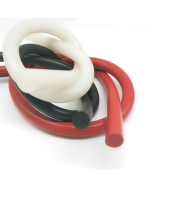
Silicone is widely used in modern construction as a sealant, for example, for glazing or filling sewer pipe sockets in place of previously used window putty and sulfur. For this purpose, it is produced as a paste mixed with a solvent. After the solvent gradually evaporates, the mixture hardens and reliably seals the gap when pressed into the crack. However, this method of application is not always convenient due to the bulkiness of the bottles containing the substance, so professional builders often include a glue gun in their tool kits. A consumable for this is silicone rod made from a specially formulated raw material that melts and turns into a liquid state when heated, and then cools back down to an elastic mass, but in the desired location for compaction.
The range of silicone products is quite wide and covers all needs.