



Questions & Answers
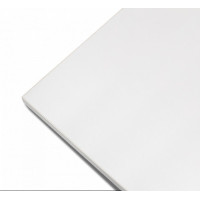
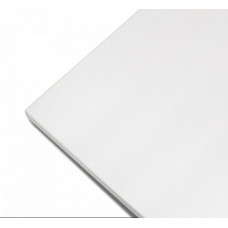
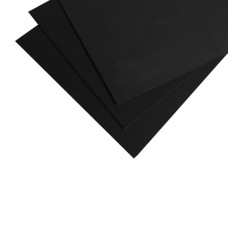
Polyethylene terephthalate sheets are made from: PET-A, RPET, CPET, APET, PET-G, PET, LUMEX, SKYGREEN, VIVAK, and SPECTAR.
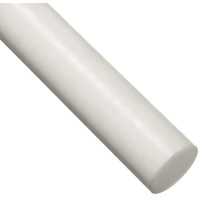
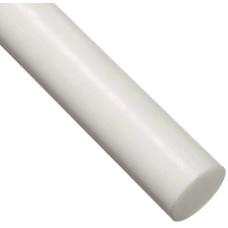
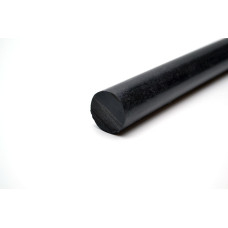
Polyethylene terephthalate rods are made from: PET PBT blend, PET Oil Filled, PET MoS₂, PET PTFE, PET GF30, PET GF, PET-C / CPET, PET-G, PET, and PETP.
Polyethylene terephthalate sheet standards:
ISO 527 - Determination of tensile properties. This standard defines tensile testing methods for plastics and is used to evaluate the modulus of elasticity, elongation, yield strength, tensile strength, material deformation behavior characteristics, strain at maximum stress, and yield stress.
ASTM D638 - Method for Determining the Mechanical Properties of Plastics under Uniaxial Tensile Testing. This standard specifies the tensile modulus of elasticity, elongation at yield and break, tensile strength, stress at a specified strain, yield stress, and tensile strength.
ISO 178 - Flexural Testing. This standard defines the behavior of a material under load, deformation, flexural stress and strength, and flexural modulus of elasticity. It is used for injection molded parts, composites, filled plastics, thermosetting plastics, and thermoplastics.
Polyethylene terephthalate rod standards:
EN 15860:2018 - Requirements and test methods for thermoplastic semi-finished products for machining. This standard covers marking, porosity, thermal and mechanical properties, dimensional tolerances, appearance, geometry, and material. It covers the following characteristics: surface quality, mechanical properties, dimensional stability, internal defects, curvature, ovality, and rod diameter.
ISO 527 - Standard specifies methods for determining the mechanical properties of plastics under uniaxial tension. It is used to determine: tensile behavior, strain at maximum load, elastic modulus, elongation, yield point, and tensile strength.
ISO 178 - Standard specifies a method for determining the mechanical properties of plastics under static bending. The standard is used to determine: the behavior of a material under bending load, stress at a given strain, bending strain, modulus of elasticity and bending strength.
Polyethylene terephthalate sheet weight chart
| Thickness, mm | Weight of 1 m², kg |
| 0,3 | 0,41 |
| 0,5 | 0,68 |
| 0,75 | 1,01 |
| 1,0 | 1,35 |
| 1,5 | 2,03 |
| 2,0 | 2,7 |
| 3,0 | 4,05 |
| 4,0 | 5,4 |
| 5,0 | 6,75 |
| 6,0 | 8,1 |
| 8,0 | 10,8 |
| 10 | 13,5 |
Polyethylene terephthalate sheet size chart
| Thickness, mm | Width, mm | Length, mm |
| 0,3 | 1000 | 2000 |
| 0,5 | 1000 | 2000 |
| 0,75 | 1250 | 2050 |
| 1,0 | 1250 | 2050 |
| 1,5 | 1250 | 2050 |
| 2,0 | 1250 | 2050 |
| 3,0 | 1250 | 2050 |
| 4,0 | 1250 | 2050 |
| 5,0 | 1250 | 2050 |
| 6,0 | 1250 | 2050 |
| 8,0 | 1250 | 2050 |
| 10 | 1250 | 2050 |
Table of physical properties of polyethylene terephthalate sheets
| Indicator | Meaning |
| Density | 1,33–1,40 g/cm³ |
| Water absorption | ≤ 0,5 % |
| Operating temperature | -40...+70 °C |
| Softening temperature | 75–85 °C |
| Light transmittance of a transparent sheet | to 90 % |
| Coefficient of linear expansion | 6–8 ×10⁻⁵ 1/°C |
| Thermal conductivity | 0,15–0,24 Wt/m·К |
Table of polyethylene terephthalate rod weights
| Rod diameter, mm | Weight of 1 meter, kg | Weight of 2 meters, kg |
| 5 | 0,027 | 0,054 |
| 10 | 0,108 | 0,216 |
| 12 | 0,156 | 0,312 |
| 15 | 0,244 | 0,488 |
| 20 | 0,434 | 0,868 |
| 25 | 0,677 | 1,354 |
| 30 | 0,976 | 1,952 |
| 35 | 1,328 | 2,656 |
| 40 | 1,734 | 3,468 |
| 45 | 2,195 | 4,39 |
| 50 | 2,71 | 5,42 |
| 60 | 3,901 | 7,802 |
| 70 | 5,311 | 10,622 |
| 80 | 6,938 | 13,876 |
| 90 | 8,784 | 17,568 |
| 100 | 10,849 | 21,698 |
| 120 | 15,624 | 31,248 |
| 150 | 24,41 | 48,82 |
| 200 | 43,396 | 86,792 |
Table of sizes of polyethylene terephthalate rods
| Diameter | Length |
| 10 mm | 1000 mm |
| 20 mm | 1000–2000 mm |
| 30 mm | 1000–3000 mm |
| 50 mm | 1000–3000 mm |
| 80 mm | 1000–2000 mm |
| 100 mm | 1000 mm |
Table of general characteristics of polyethylene terephthalate rods
| Parameter | Meaning | Units |
| Material | Polyethylene terephthalate (PET/PETP) | - |
| Density | 1,33–1,40 | g/cm³ |
| Color | transparent, white, milky | - |
| Structure | partially crystalline | - |
| Glass transition temperature Tg | 67–81 | °C |
| Melting point Tm | 245–260 | °C |
| Operating temperature | –40…+120 | °C |
| Water absorption (24 h) | 0,1–0,5 | % |
| Coefficient of linear expansion | 0,5–0,8 ×10⁻⁴ | 1/°C |
| Flammability | self-extinguishing material | - |