View by manufacturing method
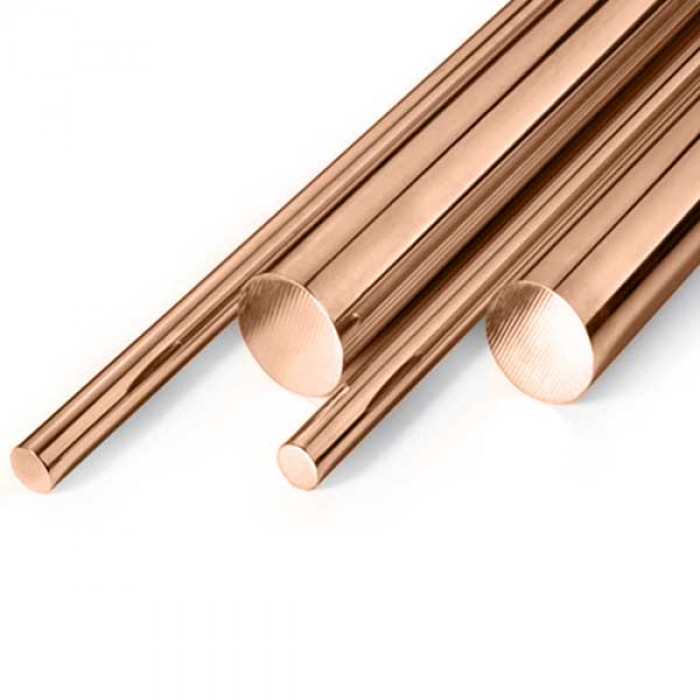
First. Copper and tin (sometimes with additives, such as zinc or lead) are melted in special furnaces at a temperature of about 1000°C. This allows you to get a homogeneous bronze alloy. Then the molten bronze is poured into round casting molds (chill molds) or continuous casting is used. After cooling, the metal hardens, taking the shape of a cylinder or circle. After this, the blanks are cooled - naturally or with water - and removed from the molds. Finally, the resulting blanks are turned, ground and, if necessary, cut to the desired dimensions. This allows you to achieve precise geometric parameters.
Chemical composition
from bronze, which contains lead, zinc, tin
Type by purpose
The bronze circle serves as an excellent blank for nuts, gears, bushings, spindles, electrodes, shafts, valves, parts of gas and water systems, components of various units, and structural elements. They are widely in demand for transport engineering, construction, electrical engineering, and instrument making. The bronze wheel is used for the manufacture of bushings, shafts, gears, gearbox parts, liners and various other products used for the needs of the national economy. The unique and diverse properties of a bronze rod allow it to be widely used in many areas of human activity. From designer forged products to heavy-duty turbine parts. Considering the wear resistance and elasticity of the metal, the bronze circle is used in the production of springs. Due to its electrical conductivity, it is also used as electrodes and conductive elements.
Additional services
Cutting is carried out according to the client's order and packaging of products according to the client's orderSent by any carriers in Ukraine
The country of manufacture
Ukraine